


IECEx ATEX Certified Explosion proof LED Lights - Zone 1 Zone 2 Hazardous Area Lighting
CESP Zone 1 Zone 2 hazardous location LED lights are in accordance with International Protection Techniques (Equipment Protection Levels), including IEC/EN 60079-0 (General Requirement), IEC/EN 60079-1 (Flameproof Enclosure), IEC/EN 60079-7 (Increased Safety), IEC/EN 60079-11 (Intrinsic Safety), IEC/EN 60079-15 (Type of Protection), IEC/EN 60079-18, IEC/EN 60079-28, IEC/EN 60079-31. If you are not sure about the Classified of your lighting application environment, please contact our technical department for the solution.
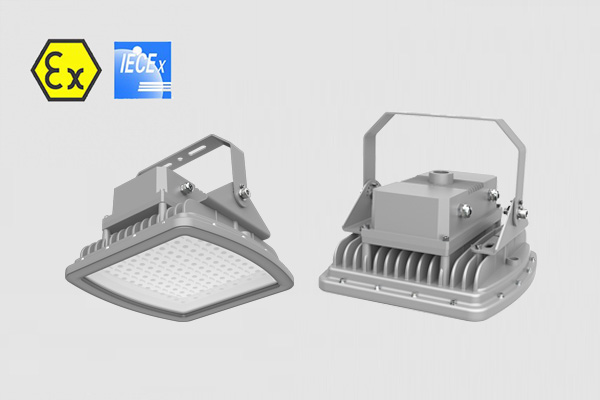
For Zone 1 Zone 2, Zone 21 Zone 22 hazardous area led lighting, 20W - 200W, 130lm/W,aluminum alloy + 8mm tempered glass, multi-installation for different projects, such as light tower, canopy light, marine grade.
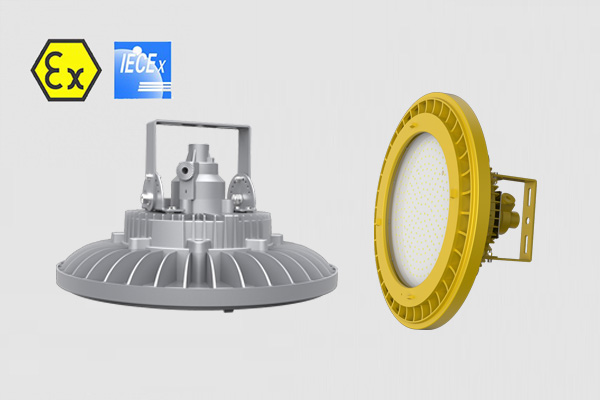
Flameproof enclosure, Ex db op is IIC T6 Gb, Zone 1 & Zone 21 with explosive gas atmosphere, Zone 21 and Zone22 with explosive dust atmosphere, 10mm temered glass, 7J impact resistance,up to 26000lm.
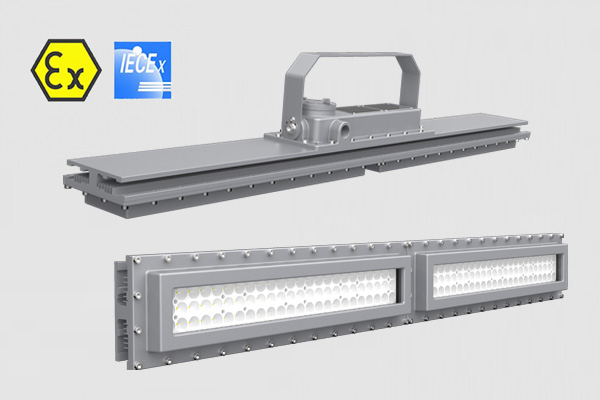
Flameproof enclosure, Ex db op is IIC T6 Gb, IP68 protection grade, tempered glass 10mm, withstand impacts up to 10J, 2 foot and 4 foot Length, 50Watt- 240Watt, 130lm/W light efficacy.
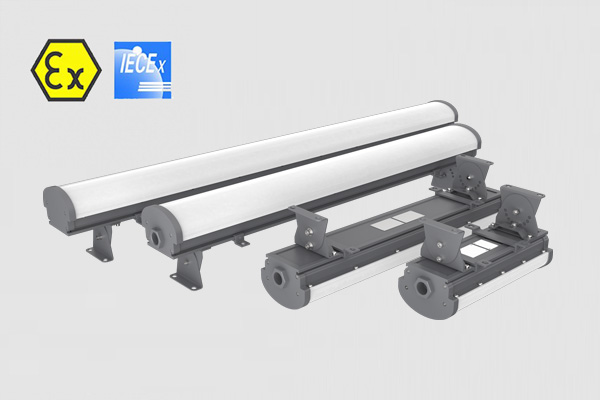
Zone 1 & Zone 21, 1ft, 2ft, 3ft, 4ft length can be selected, replace the traditional explosion-proof three-proof lamp, explosion-proof fluorescent tube, anti-corrosion, anti-glare, anti-drop, competitive price.
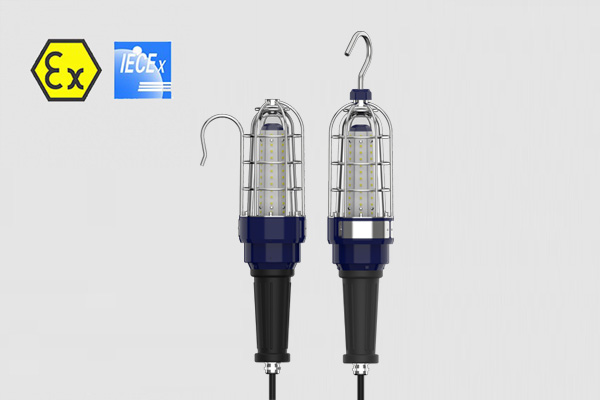
Flameproof LED hand lamp for Zone 1 & Zone 21 hazardous areas, 10mm tempered glass, pass the multi-angle drop test, 10W, 20W, 30W Power, can be connected to the cable, emergency power box.
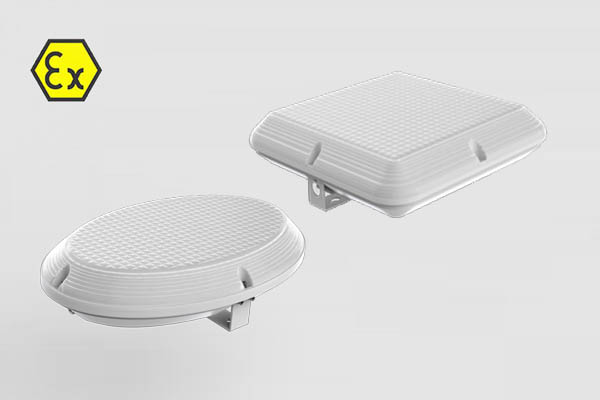
The CES-EX-SF series explosion-proof ceiling lamp has a strong shell, with features such as impact resistance, vibration resistance, and corrosion resistance. It can be used in hazardous environments of Zone 1&21, Zone 2&22.
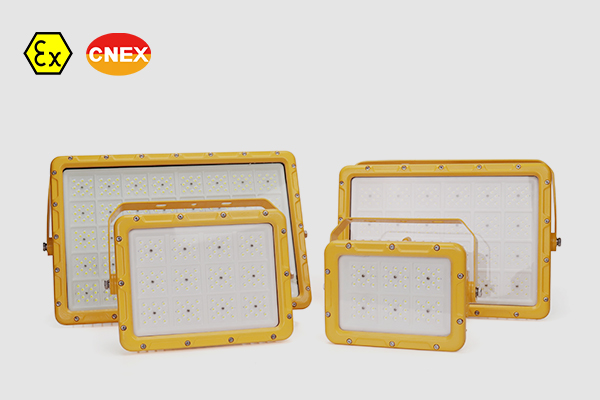
CES-EX-JX Series is your go-to solution for illuminating hazardous Zone 1 and Zone 21 areas. With ATEX approval, these Explosion-proof LED Flood Lights offer unbeatable safety standards.
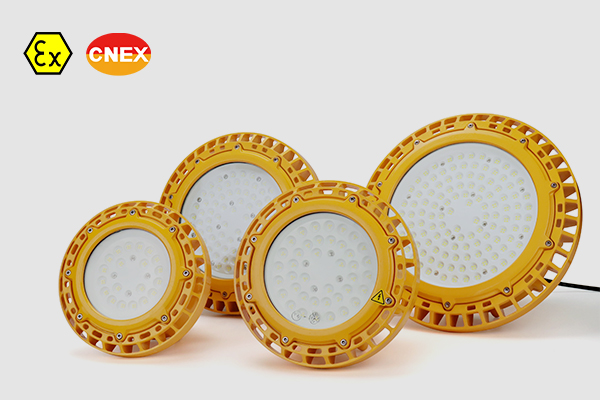
Discover the pinnacle of safety and illumination with our CES-EX-GBX Series Explosion-proof LED High Bay Lights. Designed for hazardous Zone 1 and Zone 21 areas, these lights boast ATEX approval, ensuring the highest safety standards.
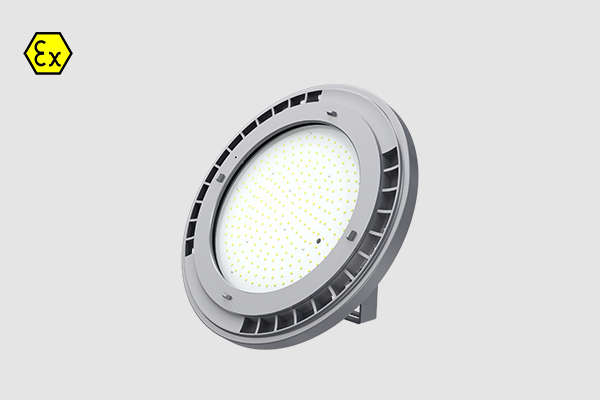
GB-02 explosion-proof lights are made of alloy aluminum and tempered glass, with shock resistance and anti-vibration performance. The luminaires have passed the ATEX IECEx standards test, from 30W to 80W for hazardous area lighting.
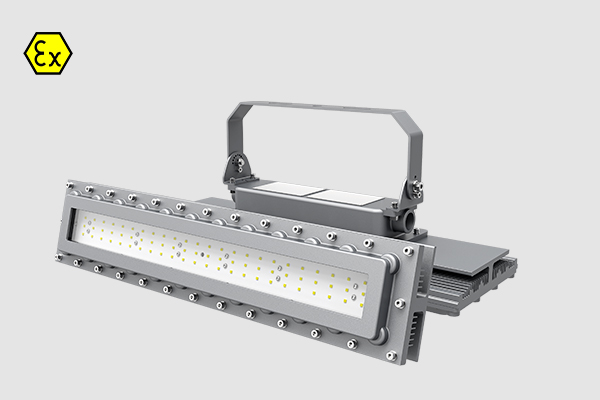
LN-02 explosion-proof lights obtained an IECEx ATEX certificate, it's safe for the Zone 1 and Zone 2 hazardous locations. The copper-free aluminum alloy body is powder-coated to increase durability and beautiful appearance, are able to withstand violent shaking and shock resistance.
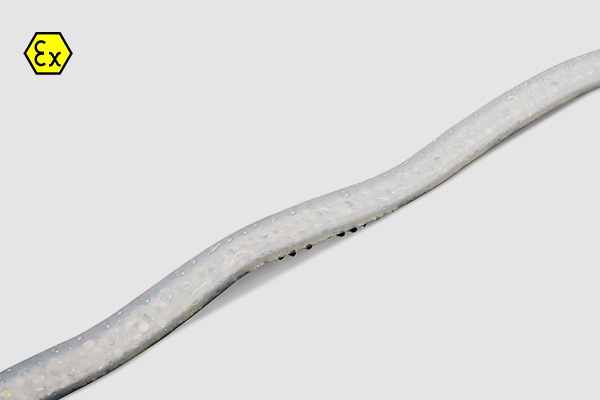
an innovative line of LED hazardous area lighting products, specifically designed for use in potentially explosive atmospheres (Zone 1/21 & 2/22) within harsh industrial settings such as coal mines and oil & gas facilities.
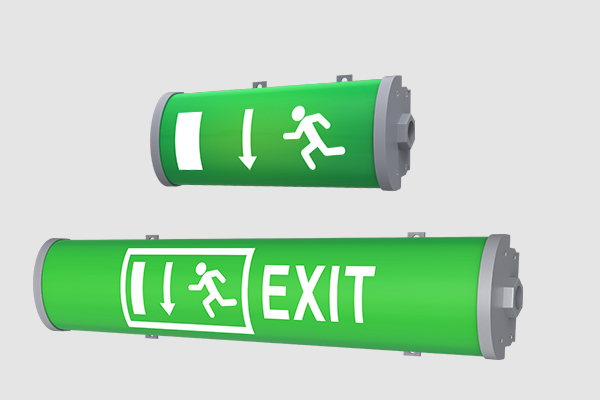
Explosion-proof safety exit lamps are for personnel evacuation, and fire operations to provide lighting fire emergency lamps! It usually uses an external power supply, when the power automatically switches to the battery power state!

Tuesday, 07 September 2021 06:41
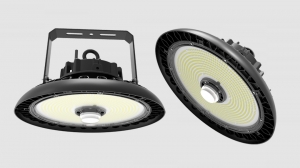
UFO LED High Bay Light CES-HB3
Published in
UFO High Bay LED
Tagged under
Tuesday, 07 September 2021 06:41
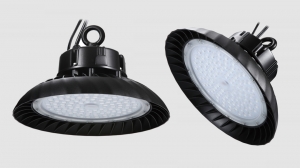
UFO LED High Bay Lighting CES-HB2
Published in
UFO High Bay LED
Tagged under
Wednesday, 25 August 2021 17:15
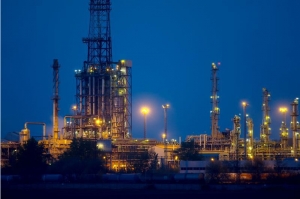
petrochemical enterprises Lighting solutions
- Characteristics and needs of petrochemical enterprises
Since the 21st century, especially in recent years, petrochemical companies have gradually appeared in people's vision, and people's thinking has gradually changed and more and more attention has been paid to sustainable development. All areas of society are constantly developing and progressing, and the production of petrochemical industry is a high-risk industry. Once a fire or explosion accident occurs, it will often cause greater casualties or property losses. From a safety perspective, petrochemical companies are different from industries such as metallurgy, machinery manufacturing, infrastructure, textiles, and transportation. The materials of petrochemical enterprises are dangerous, as are the processes and media. Their safety characteristics determine higher requirements for petrochemical enterprises. For petrochemical companies, lighting is also a very important link.
- Standard value of lighting for petrochemical equipment
|
Site name |
Reference plane And its height |
Horizontal illuminance Standard value/lx |
Horizontal illuminance Evenness |
UGR |
Ra |
|
|
Give birth Produce Attire Set Area |
Pump area, valve, main pipe under pipe rack |
Ground |
50 |
0.4 |
— |
20 |
|
Control panel, operation station |
Working surface |
150 |
0.4 |
— |
20 |
|
|
Heat exchanger |
On the plane |
30 |
0.25 |
— |
20 |
|
|
General platform |
On the plane |
10 |
0.25 |
— |
20 |
|
|
Operating platform |
On the plane |
s0 |
0.4 |
— |
20 |
|
|
cooling tower |
Ground |
30 |
0.25 |
— |
20 |
|
|
General ladders, stairs |
On the plane |
10 |
0.25 |
— |
20 |
|
|
Commonly used ladders and stairs |
On the plane |
50 |
0.4 |
— |
20 |
|
|
Indicating dial |
Working surface |
50 |
0.4 |
— |
60 |
|
|
Instrumentation |
Working surface |
50 |
0.4 |
— |
20 |
|
|
Compressor plant |
On the plane |
100 |
0.4 |
— |
20 |
|
|
Industrial furnace |
On the plane |
30 |
0.4 |
— |
20 |
|
|
splitter |
Dam crest |
50 |
0.4 |
— |
20 |
|
|
General area |
Ground |
10 |
0.25 |
— |
20 |
|
|
Electric stove |
Ground |
50 |
0.25 |
— |
20 |
|
|
Conveyor belt |
On the plane |
20 |
0.25 |
— |
20 |
|
|
Transfer point |
On the plane |
50 |
0.25 |
— |
20 |
|
|
Extrusion mixer |
On the plane |
200 |
0.25 |
— |
20 |
|
|
Air separation air compressor |
Ground |
50 |
0.4 |
— |
20 |
|
|
Site name |
Reference plane And its height |
Horizontal illuminance Standard value/lx |
Horizontal illuminance Evenness |
UGR |
Ra |
||
|
Non Give birth Produce Attire Set Area |
Tank farm |
General area |
Ground |
10 |
0.25 |
— |
20 |
|
Climbing ladders, stairs |
On the plane |
5 |
— |
— |
20 |
||
|
Monitoring area |
Ground |
10 |
0.25 |
— |
20 |
||
|
Into the hole |
On the plane |
5 |
— |
— |
20 |
||
|
Circulating water field |
Ground |
10 |
0.25 |
— |
20 |
||
|
Sewage treatment plant |
Ground |
10 |
0.25 |
— |
20 |
||
|
Wastewater tank, rainwater |
Ground |
10 |
0.25 |
— |
20 |
||
|
General area |
Ground |
50 |
0.25 |
— |
20 |
||
|
Tank trucks, loading and unloading points |
Working surface |
100 |
0.4 |
— |
20 |
||
|
main road |
Ground |
10 |
0.4 |
— |
20 |
||
|
Secondary road |
Ground |
5 |
0.25 |
— |
20 |
||
|
Building |
Change Electricity |
Outdoor power distribution device |
Working surface |
20 |
0.4 |
— |
|
|
Indoor power distribution device |
0.75m horizontal plane |
200 |
0.5 |
— |
80 |
||
|
Cable room |
Ground |
50 |
0.4 |
— |
60 |
||
|
Electrical control room |
0.75m horizontal plane |
300 |
0.5 |
22 |
80 |
||
|
Transformer room |
Oil pillow |
50 |
0.4 |
20 |
|||
|
Control room |
General control room |
0.75m horizontal plane |
300 |
0.5 |
22 |
80 |
|
|
Instrument cabinet |
1.5m horizontal plane |
300 |
0.5 |
— |
80 |
||
|
Back of the cabinet |
1.5m horizontal plane |
100 |
0.5 |
— |
80 |
||
|
Engineer station |
0.75m horizontal plane |
300 |
0.5 |
22 |
80 |
||
|
Central control room |
5.75m horizontal plane |
500 |
0.6 |
19 |
80 |
||
|
Instrument cabinet |
1.5m horizontal plane |
500 |
0.6 |
— |
80 |
||
|
Back of the cabinet |
1.5m horizontal plane |
100 |
0.6 |
— |
80 |
||
|
Engineer station |
0.75m horizontal plane |
500 |
0.6 |
19 |
80 |
||
|
Analysis Laboratory |
Research, laboratory |
0.75m horizontal plane |
500 |
0.6 |
22 |
80 |
|
|
General analysis room |
0.75m horizontal plane |
300 |
0.6 |
22 |
80 |
||
|
Office building |
Continuous complex workplace |
0.75m horizontal plane |
1000 |
0.6 |
19 |
80 |
|
|
Complex workplace (accounting, statistics, etc.) |
0.75m horizontal plane |
750 |
0.6 |
19 |
8o |
||
|
General office |
0.75m horizontal plane |
500 |
0.6 |
22 |
80 |
||
|
Reception rooms, stairs, corridors, aisles |
Ground |
50 |
0.4 |
25 |
60 |
||
|
Hall |
Ground |
100 |
0.4 |
— |
60 |
||
|
Toilet, bathroom |
Ground |
75 |
0.4 |
— |
60 |
||
|
Electromechanical Repair |
Equipment maintenance room General area |
Ground, |
150 |
— 0.6 |
— 25 |
80 60 |
|
|
Warehouse |
1.0m horizontal plane |
100 |
0.6 |
— |
60 |
||
|
Other |
Trestle |
Bridge deck |
10 |
0.4 |
— |
||
- Selection and installation of lighting fixtures
- The selection and installation of lighting fixtures should ensure safety under normal conditions, and should not cause danger to people and the environment.
- High-efficiency lamps should be selected to meet the glare restrictions and light distribution requirements
- The selection of lamps should comply with the following principles:
- In general outdoor venues, the protection level should not be lower than IP54;
- Outdoor covered venues; the protection level should not be lower than IP44;
- When the environmental pollution is serious; the protection level should not be lower than IP65;
- Anti-corrosion: Corrosive environment should use lamps with corresponding anti-corrosion grade;
- Anti-vibration: Lamps and lanterns used in a vibrating and swinging environment should have anti-vibration and anti-falling measures;
- Dustproof: lamps used in explosive gas, dust or fire hazard areas.
CESP high-quality explosion-proof led lights can be used in Zone 1 and Zone 21, Class I Class 1 and Class 2, and Class II Class 1 and Class 2 hazardous locations. They are very suitable for lighting in pharmaceutical factories.
|
Lamp type |
Lamp picture |
Application area |
|
|
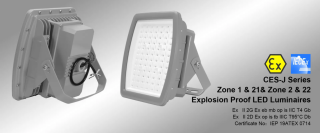
This explosion proof led floodlight adopts a sealed structure design, waterproof grade IP66, anti-corrosion grade WF2, and meets UL1598A marine grade certification, And it has stronger anti-vibration and impact resistance, and can be used in hazardous areas where combustible or explosive substances may exist in the normal environment. |
|
|
|
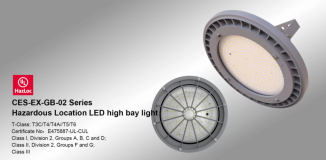
This explosion-proof patio lamp is equipped with a corrosion-resistant high-strength aluminum alloy shell, IP66 waterproof rating and WF2 anti-corrosion rating, which is very suitable for salt water and corrosive environments. The anti-shock and vibration pattern tempered glass lampshade design can reduce glare, and is suitable for use in hazardous environments where combustible or explosive substances are continuously or frequently present in normal environments. |
|
|
|
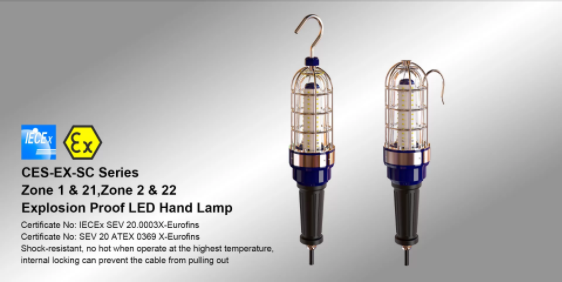
This explosion proof led drop light is durable and corrosion-resistant. It has undergone extreme water pressure and heavy pressure tests and can withstand 7J pressure and 3M underwater operations. The IP66 waterproof rating and the WF2 anti-corrosion rating enable the portable hand lamp with vibration resistance and impact resistance to be used as inspection lights and explosion-proof work lights in dangerous areas where flammable or explosive substances may exist in the normal environment. |
Published in
Application
Tagged under
Friday, 06 August 2021 03:57
Cigarette factory lighting solutions
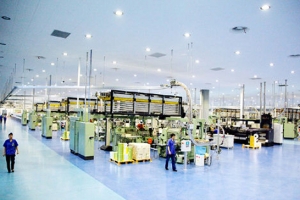
Lighting design should fully consider the characteristics of continuity, automation, high speed, high taxes and benefits of cigarette production, as well as local dusty, humid, and high-temperature environmental conditions to ensure reliable lighting and good vision, pay attention to safety protection, and prevent electric shock and electrical Fire etc.
- The choice of lighting method
- According to the various layout and use requirements of the craft, under the principle of satisfying the visual requirements and energy saving, the general lighting partitions, general lighting or mixed lighting, etc. shall be used respectively, but the local lighting shall not be used alone.
- The lighting methods used in major production sites are as follows:
- General lighting should be adopted in the rolling package and filter rod forming workshop; when the lamps are arranged along the production line and the installation and commissioning are low, the general lighting of the partition is declared.
- Divisional general lighting should be adopted in the workshops of threshing and redrying, silk making, tobacco flakes, and tobacco expansion.
- Some areas of the leaf threshing and redrying and silk making workshops, such as the leaf distribution table, the leaf selection table, the exit of the cutting machine, and the exit of the drying machine, should adopt mixed lighting.
- Lighting standard value (Friendly reminder: this standard value is for reference only)
Standard value of illuminance of working surface in production and workplace
|
Production and workplace |
Standard value of illumination (1x) |
Note |
||
|
primary |
intermediate |
advanced |
||
|
Tobacco grading and batching room |
100 |
150 |
200 |
|
|
Threshing and redrying workshop |
100 |
150 |
200 |
|
|
Vacuum regaining section |
100 |
150 |
200 |
|
|
Point-cutting section |
100 |
150 |
200 |
|
|
Leaf base and tip selection section |
100 |
150 |
200 |
|
|
Leaf base and tip selection table |
150 |
200 |
300 |
|
|
Leaf and stem separation section |
100 |
150 |
200 |
|
|
Leaf redrying section, tobacco stem redrying section |
100 |
150 |
200 |
|
|
Blade packing section, tobacco stem packing section, broken leaf processing section |
100 100 |
150 150 |
200 200 |
|
|
Dust removal room |
30 |
50 |
75 |
|
|
Workshop sample room |
150 |
200 |
300 |
|
|
Packing material room |
30 |
50 |
75 |
|
|
Online control panel |
75 |
100 |
100 |
Screen vertical |
|
Silk workshop |
100 |
150 |
200 |
|
|
On-line control panel for the outlet of shredder (cut leaf shreds, cut stem shreds), silk dryer, and shredder shredder export |
150 75 |
200 100 |
300 150 |
Screen vertical |
|
Leaf storage cabinet, stem storage cabinet |
50 |
75 |
100 |
|
|
Wire storage cabinet, stalk storage cabinet |
50 |
75 |
100 |
|
|
Spice and sugar preparation room |
100 |
150 |
200 |
|
|
Dust removal, smoke and dust treatment room |
30 |
50 |
75 |
|
|
Rolling and wrapping workshop |
75 |
100 |
150 |
|
|
Roll-up package, packing section |
150 |
200 |
300 |
If it is a windowless factory, the illuminance will be increased by one level |
|
Finished product conveying corridor |
30 |
50 |
75 |
|
|
Cigarette temporary storage room |
50 |
75 |
100 |
|
|
Temporary storage room for auxiliary materials |
50 |
75 |
100 |
|
|
Finished product turnover warehouse |
50 |
75 |
100 |
|
|
Residual smoke treatment room |
75 |
100 |
150 |
|
|
Glue room |
75 |
100 |
150 |
|
|
Dust removal, smoke and dust treatment room |
30 |
50 |
75 |
|
|
Vacuum pump room |
30 |
50 |
75 |
|
|
Auxiliary room of threshing and redrying, silk making, and wrapping workshop |
||||
|
Workshop inspection room |
150 |
200 |
300 |
|
|
Workshop control room |
100 |
150 |
200 |
|
|
Mechanical and electrical maintenance room |
300 |
500 |
750 |
|
|
Spare parts room |
30 |
50 |
75 |
|
|
Forklift charging room |
30 |
50 |
75 |
|
|
Lubricant Room |
20 |
30 |
50 |
|
|
Filter rod forming workshop |
||||
|
Temporary storage room for tow and auxiliary materials |
50 |
75 |
100 |
|
|
Filter rod forming and launching section |
100 |
150 |
200 |
|
|
Triacetin temporary storage room |
30 |
50 |
75 |
|
|
Tobacco sheet workshop |
||||
|
Forming section |
100 |
150 |
200 |
|
|
Flake and flake wire storage room |
100 |
150 |
200 |
|
|
Tobacco expansion workshop |
100 |
150 |
200 |
|
|
Dry ice method tobacco expansion section |
100 |
150 |
200 |
|
|
Carbon dioxide storage room |
30 |
50 |
75 |
|
|
Quality control room |
100 |
150 |
200 |
|
|
Central control room |
100 |
150 |
200 |
|
|
Near looser |
150 |
200 |
300 |
|
|
Hot and cold end control panel |
75 |
100 |
150 |
Screen vertical |
|
Pump House |
30 |
50 |
75 |
|
|
Freon method tobacco expansion room |
100 |
150 |
200 |
|
|
Puffing treatment room |
100 |
150 |
200 |
|
|
Expanded tobacco storage room |
30 |
50 |
75 |
|
|
Central laboratory and tobacco testing station |
||||
|
Laboratory |
150 |
200 |
300 |
|
|
Cigarette Evaluation Room |
150 |
200 |
300 |
|
|
Auxiliary room |
75 |
100 |
150 |
|
|
storehouse |
||||
|
Original Tobacco Bank |
20 |
30 |
50 |
|
|
Finished product library |
30 |
50 |
75 |
|
|
Finished product turnover warehouse |
30 |
50 |
75 |
|
|
Tobacco Bank |
30 |
50 |
75 |
|
|
Tobacco turnover bank |
30 |
50 |
75 |
|
|
Tow library |
30 |
50 |
75 |
|
|
Paper Material Library |
30 |
50 |
75 |
|
|
Hardware spare parts library |
30 |
50 |
75 |
|
|
Flammable goods warehouse |
20 |
30 |
50 |
|
|
Scrap library |
20 |
30 |
50 |
|
|
Liquefied Petroleum Gas Storage |
20 |
30 |
50 |
|
|
Diesel depot |
20 |
30 |
50 |
|
Standard value of illuminance in auxiliary room
|
Room name |
Height of working surface from ground (m) |
Standard value of illuminance (1x) |
Note |
||
|
primary |
intermediate |
advanced |
|||
|
Office, data room, accounting room, file room, reception room |
0.75 |
100 |
150 |
200 |
|
|
Design room, drawing room, craft room |
0.75 |
150 |
200 |
300 |
|
|
Product showroom |
0.75 |
150 |
200 |
300 |
|
|
Reading room |
0.75 |
100 |
150 |
200 |
|
|
Typing room |
0.75 |
150 |
200 |
300 |
|
|
Binding room, copy room, printing room |
0.75 |
75 |
100 |
150 |
|
|
Infirmary |
0.75 |
75 |
100 |
150 |
|
|
Workshop lounge |
ground |
50 |
75 |
100 |
|
|
Canteen |
0.75 |
50 |
75 |
100 |
|
|
kitchen |
0.75 |
75 |
100 |
150 |
|
|
Bathroom, changing room |
ground |
20 |
30 |
50 |
|
|
Toilet |
ground |
10 |
15 |
20 |
|
|
bathroom |
0.75 |
20 |
30 |
50 |
|
|
hall |
ground |
30 |
50 |
75 |
|
|
Corridor, stairwell |
ground |
15 |
20 |
30 |
|
Standard value of illuminance in open spaces and roads
|
Place name |
Determine the plane of illuminance |
Standard value of illuminance (1x) |
Note |
|||
|
Open space |
Tobacco yard |
ground |
2 |
3 |
5 |
|
|
Coal yard |
ground |
0.5 |
1 |
2 |
||
|
cooling tower |
Water tower platform |
2 |
3 |
5 |
||
|
Factory front area |
ground |
10 |
15 |
20 |
||
|
Factory road |
Main road |
ground |
3 |
5 |
10 |
|
|
Secondary road |
ground |
1 |
2 |
3 |
||
- Lighting requirements for cigarette factories
The system layout of the cigarette factory is more complicated. Therefore, in its lighting design, first determine the choice of lamps of a certain model and power, then reasonably determine the arrangement of lamps and lanterns and lamps number.
Lamp selection:
- Flameproof lamp
- Waterproof and dustproof lamps
- Anticorrosive lamps
- Shock-resistant and impact-resistant lamps
Application of CESP LED explosion-proof lighting in cigarette factories:
CESP high-quality explosion-proof led lamps can be used in Zone 1 and Zone 21, Class I Class 1 and Class 2, and Class II Class 1 and Class 2 hazardous locations. They are very suitable for lighting At the cigarette factory.
|
Lamp type |
Lamp picture |
Application area |
|
|
Trestle roads, on-site roads, unloading dockes, loading docks, etc. |
|
|
|
Storage yard, belt conveyor corridor, transfer building, shipping dock, etc. |
|
|
|
Such as oil refineries, offshore production, drilling platforms, fuel depots, chemical plants, cigarette factories |
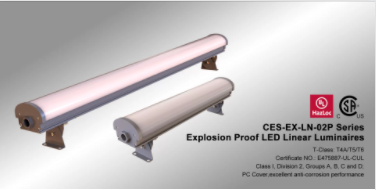
Published in
Application
Tagged under
Thursday, 22 July 2021 05:40
coal washing plants lighting solution
Coal washing is an indispensable process in coal deep processing. The coal mined directly from the mine is called raw coal.The raw coal is mixed with many impurities in the mining process, and the quality of coal is different. Coal with a low intrinsic ash content and coal with a high intrinsic ash content will mix. Coal washing is an industrial technique that removes impurities from raw coal, or classifies high-quality coal from inferior coal.
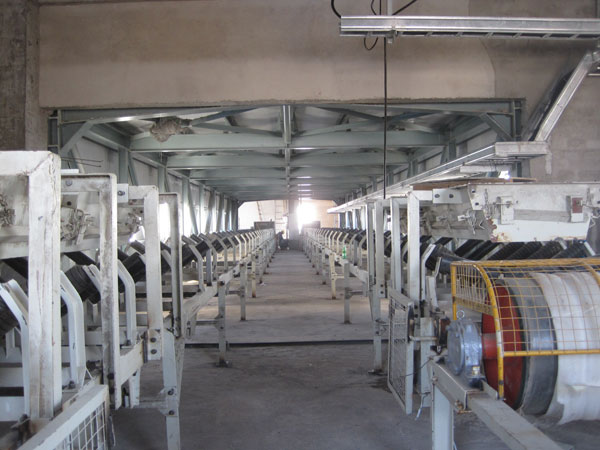
The products produced after the coal washing process are generally divided into gangue, medium coal, grade B clean coal, and grade A clean coal. The finished coal after the coal washing process is usually called clean coal. Coal washing can reduce the cost of coal transportation and increase the utilization rate of coal. Cleaning coal is generally an energy source that can be used as fuel. Cleaning coal is generally used for coking, which needs to remove sulfur and impurities in industrial processes to meet the standards for coking.
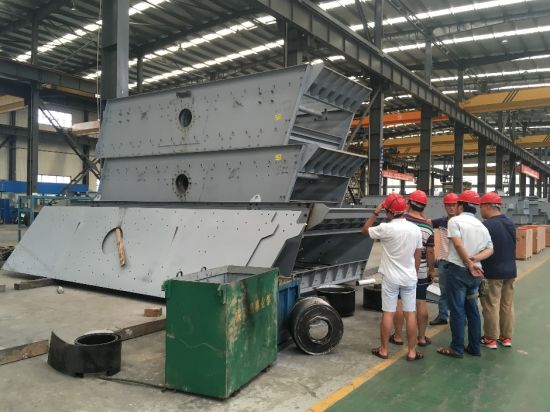
The purpose of removing gangue in coal is to prevent it from melting and forming agglomerates during high-temperature combustion, which can easily block the furnace or other combustion facilities, and it does not burn to reduce the heat of combustion and affect efficiency.
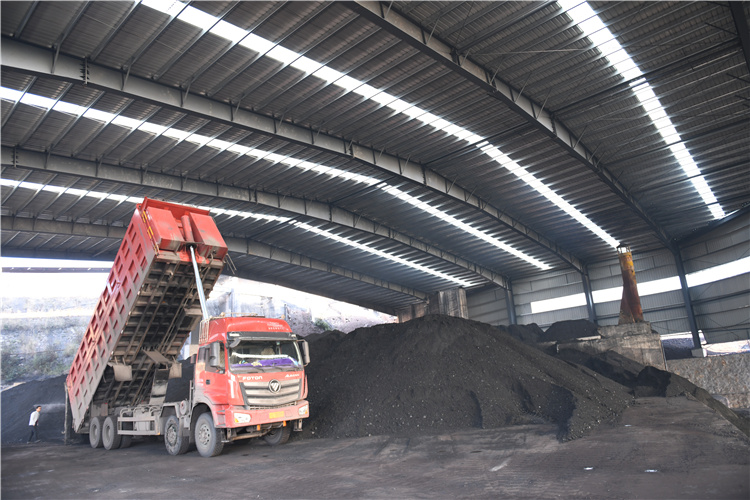
Selection and arrangement of explosion-proof lighting fixtures
The system layout of the coal preparation plant is relatively complicated, and the architectural design such as screening and crushing, the main plant, and the belt conveyor trestle have their own characteristics. Therefore, in its lighting design, it is first necessary to determine the selection of lamps of a certain model and power, and then reasonably determine the arrangement of lamps and the number of lamps.
- Flameproof enclosure type: The raw coal system should use LED explosion-proof lamps.
- Waterproof and dustproof type: Waterproof and dustproof lamps should be used in other workshops.
- Anti-corrosion type: It is necessary to specify that the flotation reagent storehouse should be selected anticorrosive lamps.
- Shock-proof and anti-falling: Shock-proof lamps should be used in places with heavy vibrations such as forging hammers and large bridge cranes, and anti-falling measures should be taken for lamps used in places with large swings.
CESP LED explosion-proof lighting application in coal mine:
CESP high-quality explosion-proof led lamps can be used in Zone 1 and Zone 21, Class I Class 1 and Class 2, and Class II Class 1 and Class 2 hazardous locations. They are very suitable for lighting in coal washing plants.
|
Lamp type |
Lamp picture |
Application area |
|
|
Trestle roads, on-site roads, unloading dockes, loading docks, etc. |
|
|
|
Storage yard, belt conveyor corridor, transfer building, shipping dock, etc. |
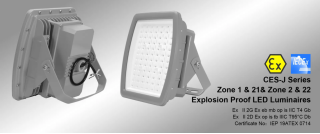
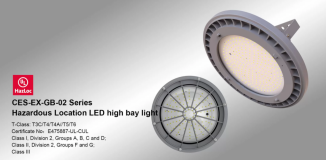
185W LED explosion-proof lighting design reference for coal mine lighting:
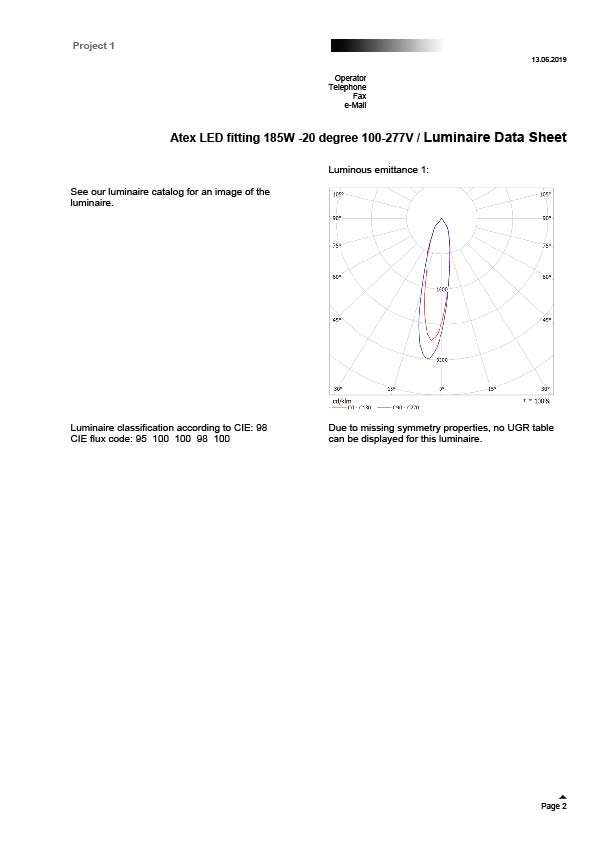
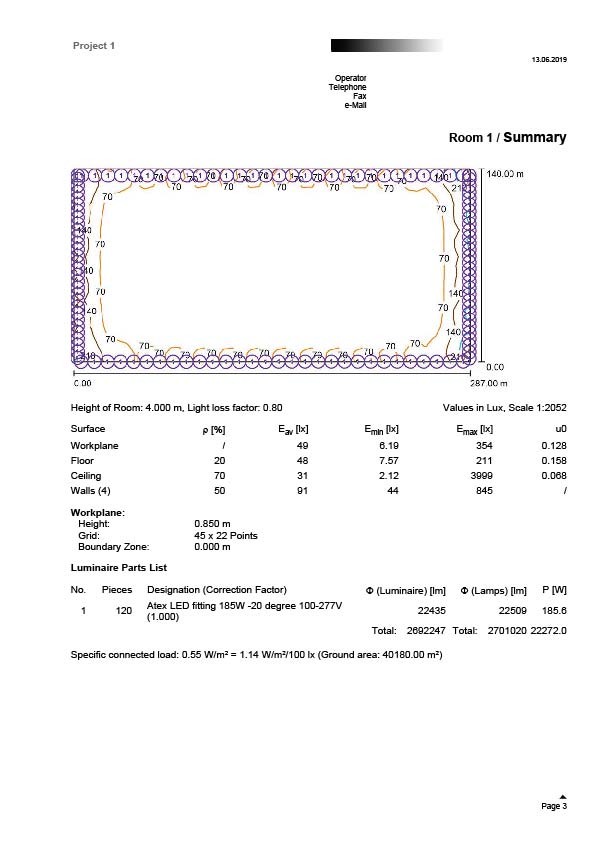
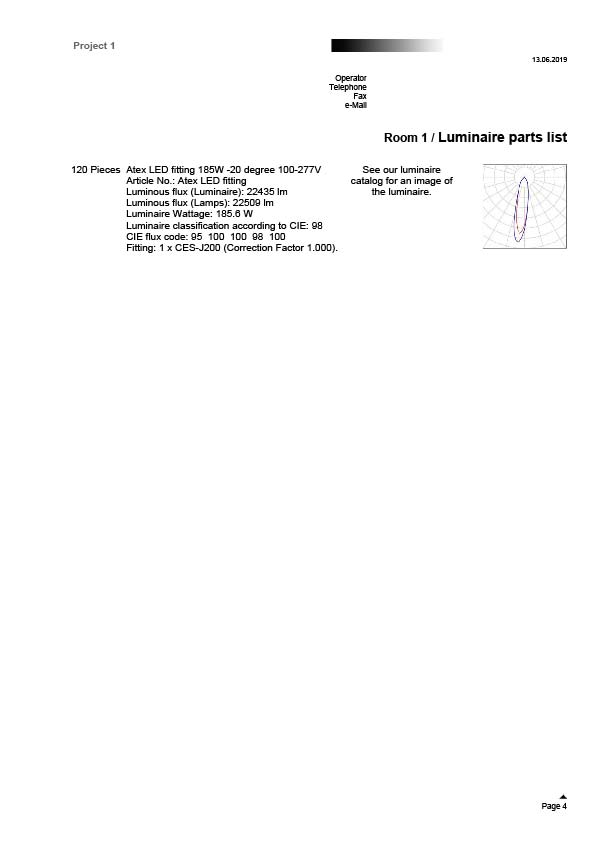
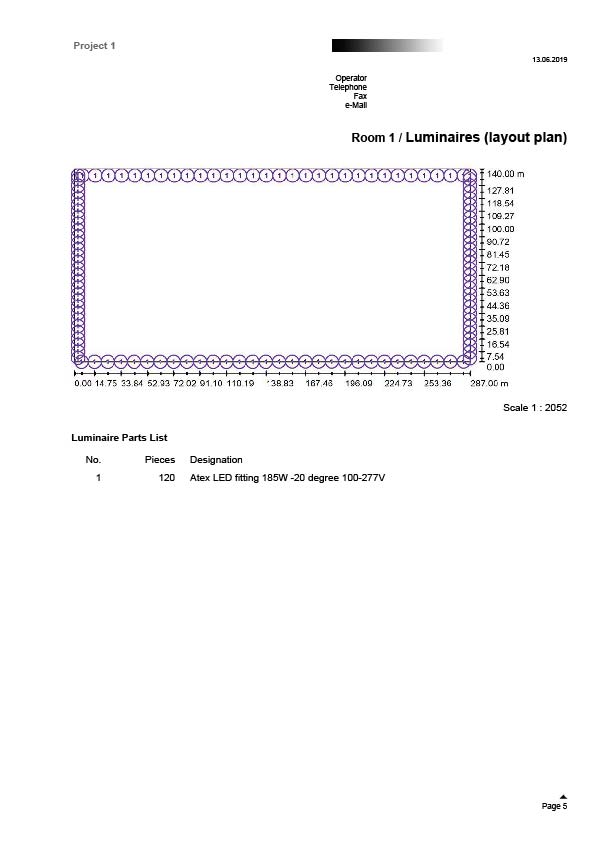
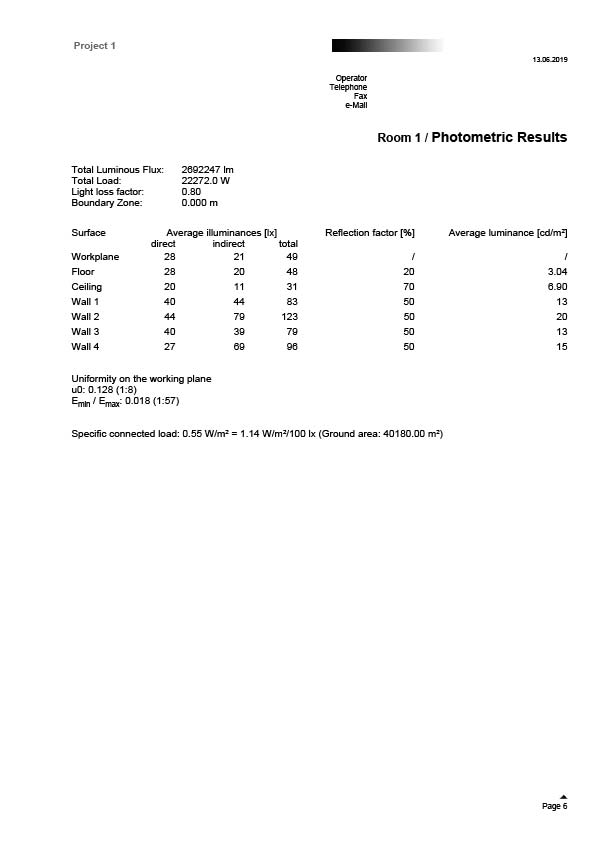
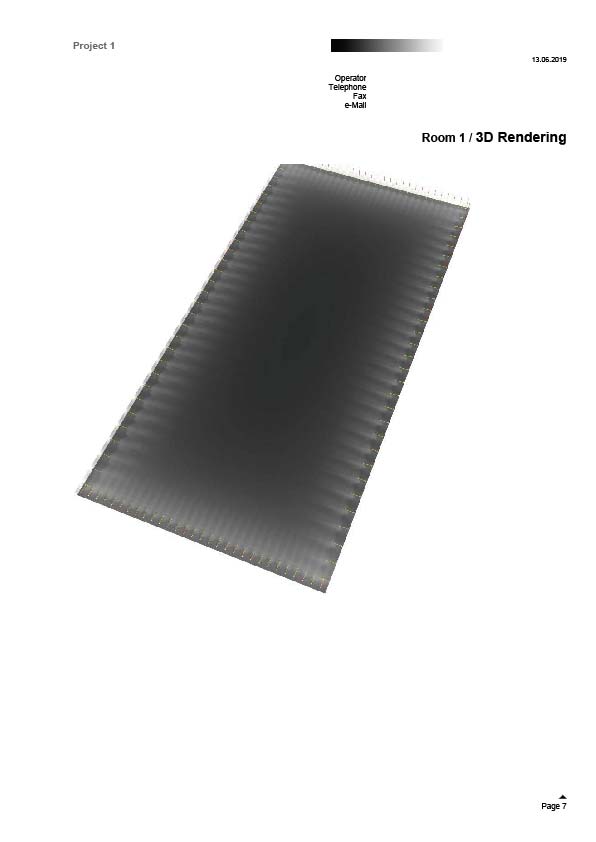
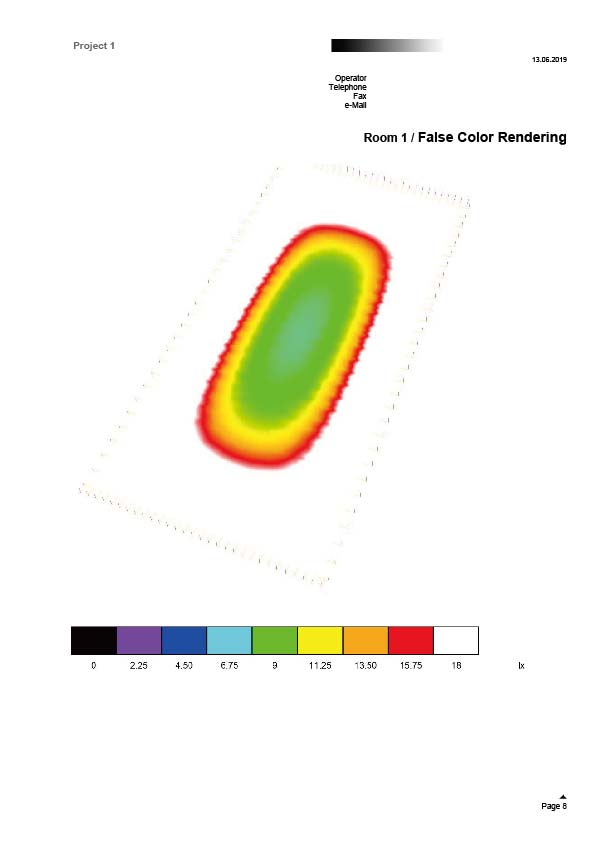
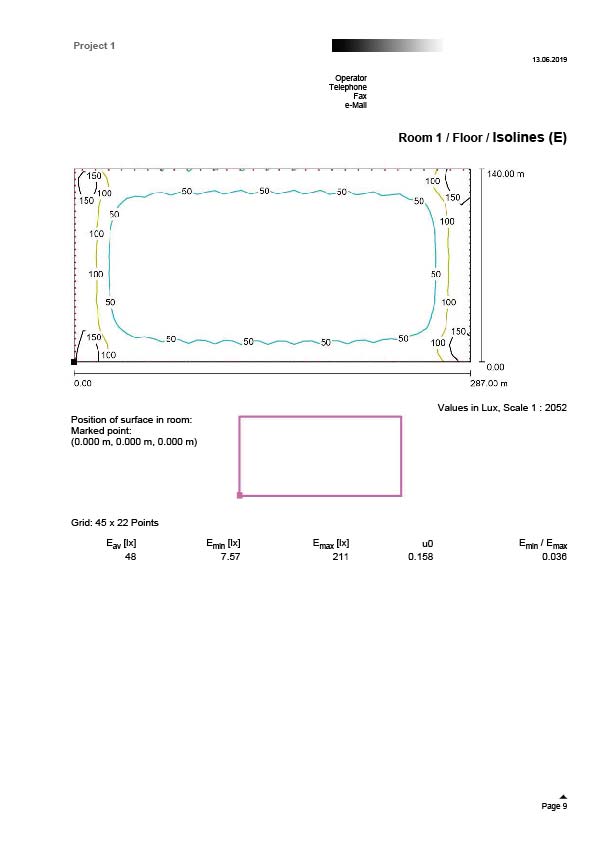
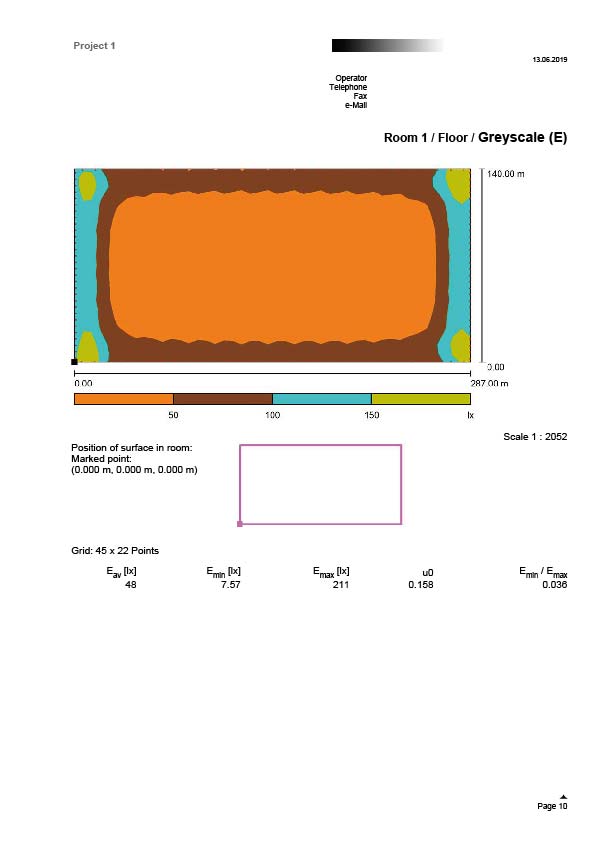
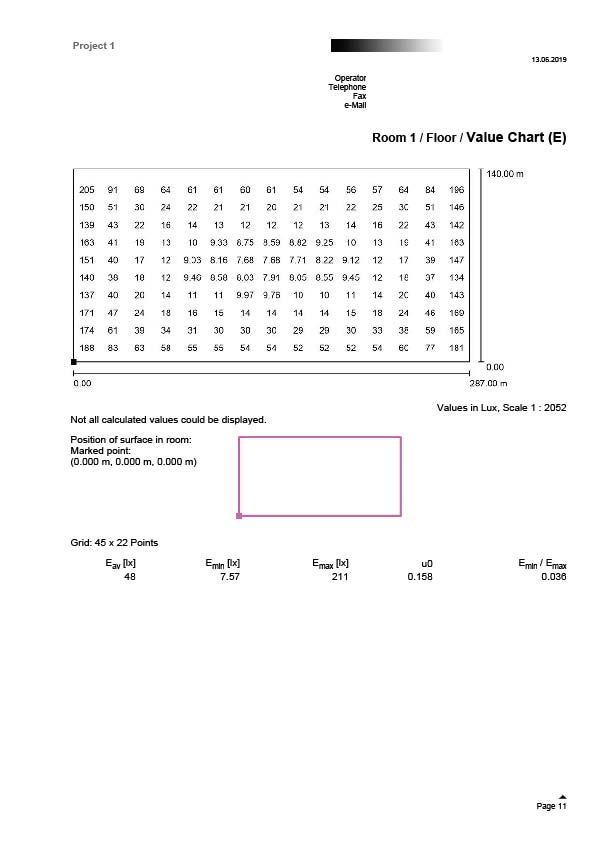
Published in
Application
Tagged under
Monday, 05 July 2021 06:44
How to choose the CESP LN series explosion-proof linear lamp
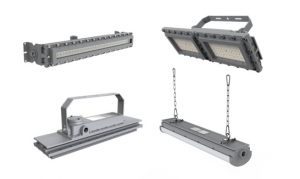
CESP is a state-level high-tech enterprise and a contract energy management company that has been filed by the three ministries and commissions. CESP strive to high quality patent product in military & industry areas, is the Top OEM & ODM supplier for explosion proof lighting solution of China and the 1st Company in China to be certify for hazardous location led lighting fixture by UL & CUL.
Due to different market certification standards, CESP divides the line lights into CES-EX-LN, CES-EX-LN02, CES-EX-LN-O2P and CES-EX-LN-02N in order to meet the demand of the whole market, which are Zone System and Division System respectively.
- Basic product parameters
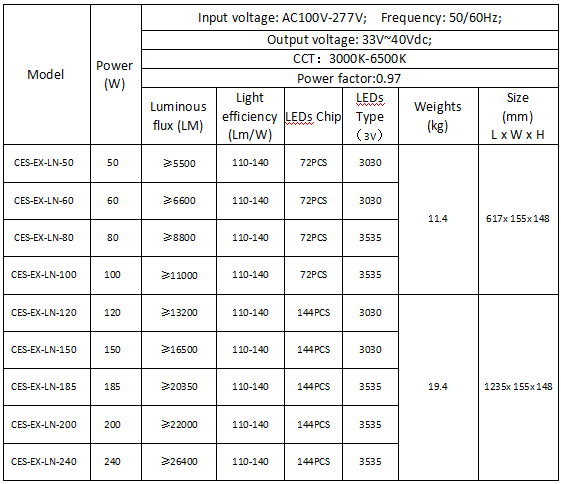
CES-EX-LN (Zone Explosion proof LED Linear Light)
CES-EX-LN02(Division Hazardous Location LED Linear Lamp)
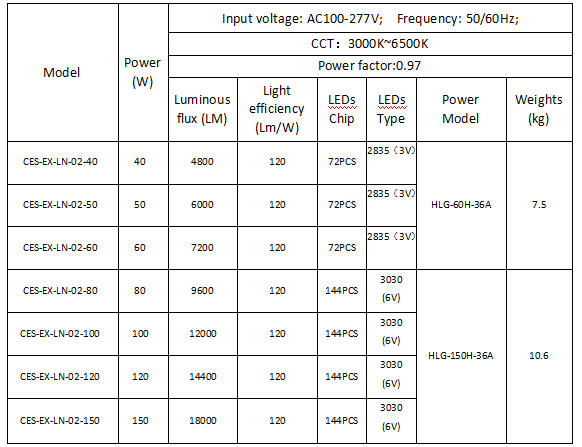
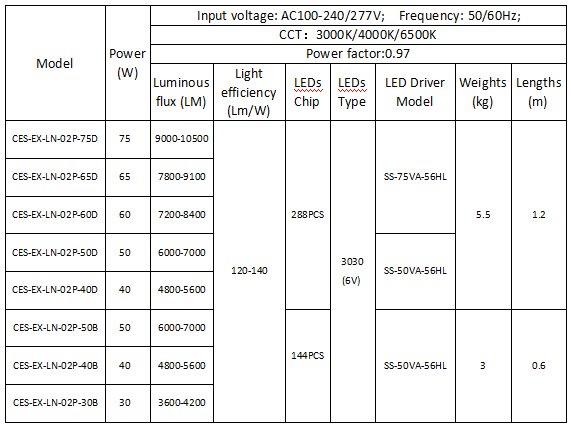
CES-EX-LN-02P(Zone and Division Hazardous Location LED Linear Light)
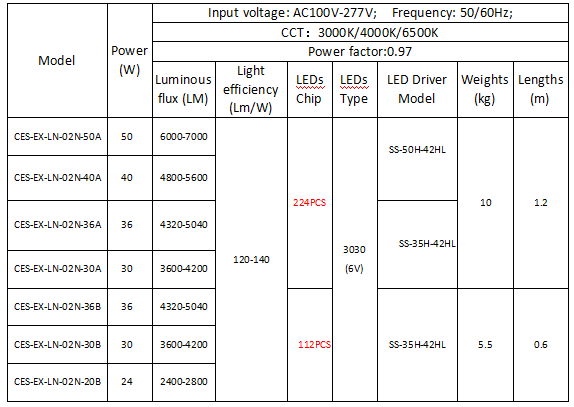
CES-EX-LN-02N(Division Hazardous Location LED Linear Light)
- Competing goods analysis
Most of the explosion-proof lamps and explosion-proof tri-proof lamps on the market are made of incandescent lamps, fluorescent lamps, high pressure metal gas discharge lamps and other lamps. This kind of lamps has mature technology and comfortable vision, and is widely used in indoor and general lighting, outdoor work lighting, but its disadvantages are obvious when working lighting.
- Poor environmental adaptability, it often fails to work normally in a low temperature environment;
- The safety factor is low, especially for gas discharge lamps such as metal halide lamps. The temperature of the lamps is high during operation, which is easy to become a hidden danger of safety accidents;
- There are many faults and maintenance is difficult. Once the lamp is damaged, it cannot be repaired in time, which will seriously affect the safety of night production;
- Poor vibration resistance and easy to damage. For example, the drilling offshore equipment has strong vibration, especially during the relocation process. The lamp tubes made of glass are often damaged and need to be replaced in large quantities, resulting in a lot of manpower and material loss, and mercury vapor and broken glass are returned to the environment. Cause harm;
With the continuous development of social productivity, LED technology continues to make breakthroughs. At present, white LEDs with luminous efficiency above 120Lm/W have been mass-produced. It has become the fourth generation of electric light sources after incandescent lamps, fluorescent lamps, and high-pressure metal gas discharge lamps, and is called the ultimate form of electric light sources.
The lamp beads used in the CESP explosion proof LED linear lamp LN series are high-quality LM80 certified chips, with a color temperature of 6000K and a color rendering index greater than 70. It can present colors and details more accurately than high-pressure sodium lamps or mercury vapor lamps. The luminous efficiency is as high as 140LM\W. such as the 50W hazard-area LED Linear light can produce 5500LM, 90° or 120° beam angle, which can meet the requirements of industrial lighting.
The copper-free aluminum alloy lamp body is powder-coated, which not only increases the strength and durability of the shell, but also improves the beautiful appearance. The combination of special heat dissipation design and LED technology helps the line lamp achieve an excellent rated life of 50,000 hours and an environmental adaptability of -40-+55°C.
The shell glass is made of high-strength tempered glass, which has been tested by internal pressure and hydraulic pressure. The anti-corrosion grade is WF2 and the IP grade is IP66. And this series of hazardous environment linear lights have multiple voltage capabilities and can work under 100-277 VAC, 50/60Hz without any special ballasts.
In general, this series of LED explosion-proof lights fixture are beautiful in appearance and powerful in function. They can accept ceiling, hoisting, pole mounting, wall mounting and other installation methods. They are very suitable for wastewater treatment, oil and gas refineries, drilling rigs, petrochemical facilities, food and beverage facilities, tunnels, outdoor wall and stanchion mounted general area lighting, and where flammable vapors, gases, ignitable dusts, fibers or flyings are presen.
- Product Performance Analysis
For the needs of the global market, the features of the four lamps of the CESP linear lamp LN series are different.
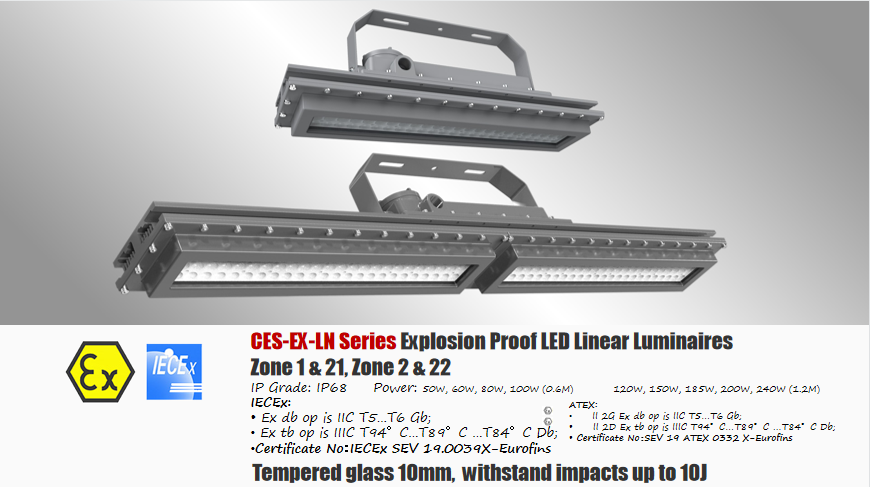
CES-EX-LN series is a zone system with ATEX/IECEX certification flameproof enclosure explosion-proof linear lights, can be used in Zone 1&21, Zone 2&22 and other hazardous environments. Its power supply cavity and light source cavity are independent sub-cavities. The explosion-proof performance is reliable. The toughened glass is designed for impact resistance, and the thickness of 10mm can withstand an impact of 7J. And after the hydraulic test, the Zone 1 lamp has superior sealing performance, and can be suitable for working under water (3 meters).
CES-EX-LN-02 is an explosion-proof linear lights with UL certification for Division system, which can be used in Class I, Division 2, Groups A, B, C and D; Class II, Division 2, Groups F and G; Class Used in hazardous environments such as III, the toughened glass is designed for impact resistance, 6mm thickness can withstand 4J impact, super strong structural strength, with optional emergency functions, suitable for general area lighting for tunnels, outdoor walls and pillars installation. The first choice to replace traditional fluorescent lamps.
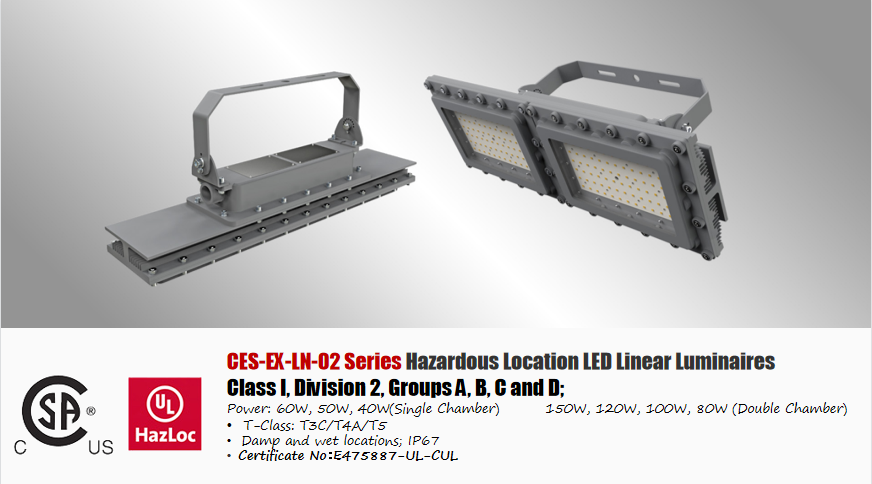
CES-EX-LN-02P is a explosion proof tri-proof lamp with UL certification for Division system and ATEX/IECEX certification for Zone system. It can be used in hazardous environments such as Class I, Division 2, Groups A, B, C and D. , And used in hazardous environments such as Zone 1&21, Zone 2&22, it is the only explosion-proof lamp in the line lamp series with North American and European standards. It is the most cost-effective linear lamp in CESP. Its mask can withstand 4J impact. The upper temperature limit can reach 130°C. It has better corrosion resistance and is suitable for lighting with lower installation heights. It is the first choice to replace traditional fluorescent lamps.
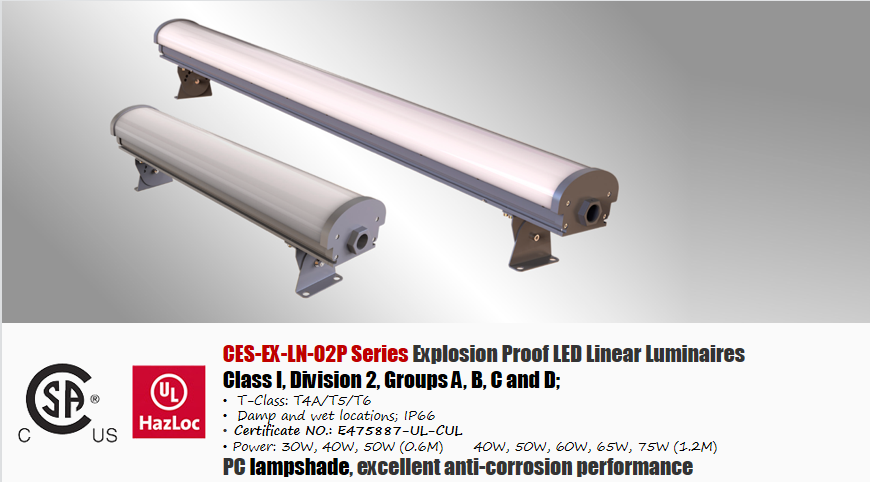
CES-EX-LN-02N is a Division system with UL certification of explosion-proof linear lighting, which can be used in hazardous areas such as Class I, Division 2, Groups A, B, C and D; although the appearance is the most in the LN series a compact linear lamps, but still strong, the design of toughened glass is impact resistant, and the thickness of 6mm can withstand the impact of 4J. It is very suitable for lighting with lower installation heights, and it is an alternative to traditional fluorescent lamps, incandescent lamps and other lamps. The product of choice.
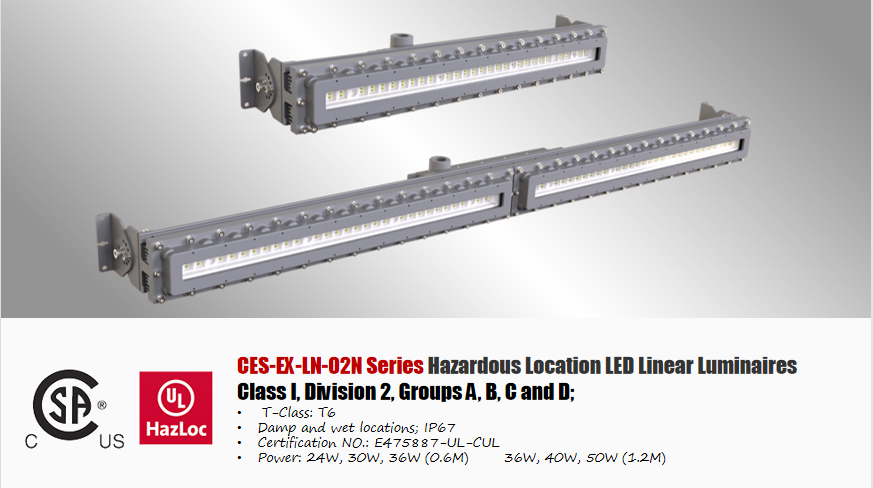
The following is a comparison of explosion-proof signs and parameters of different systems of LN series linear lights.
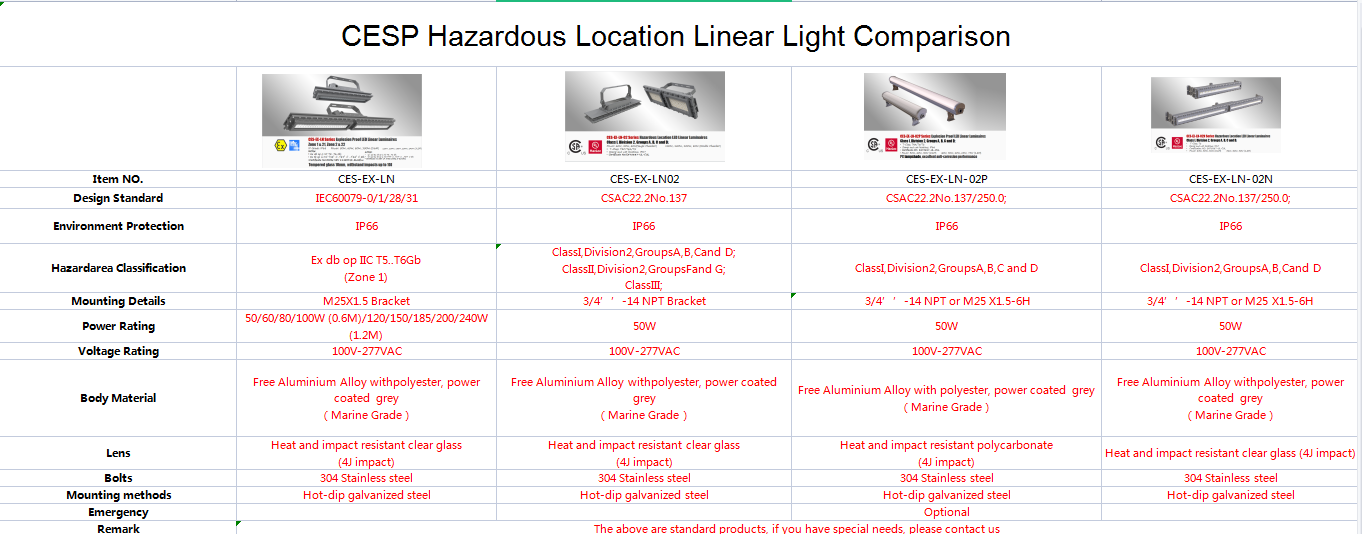
- Product appearance and naming analysis
CESP's explosion-proof lights are mainly gray in appearance. From the appearance, gray explosion-proof lamps are more beautiful and atmospheric, and adapt to the lighting environment of industrial areas, and meet the needs of target consumers for appearance colors. The name of the LN series is also simplified from the word Linear. The following is the naming connotation and nameplate analysis of each lamp.
- CES-EX-LN-W-A-B-C-D-E
CES - SHENZHEN CESP ;
EX - Hazardous Locations;
LN – Linear ;
W - Power;
A – Configuration, 01: Linear ;
B – CCT, 01:3000K; 02: 4000K; 03: 6500K ; 04: 5000K; 05: 5700K…
C- Mounting, 01:Ceiling Mounting; 02: U- bracket;
D-Color, 01: Yellow; 02: Gray…;
E-other, Commercial purpose
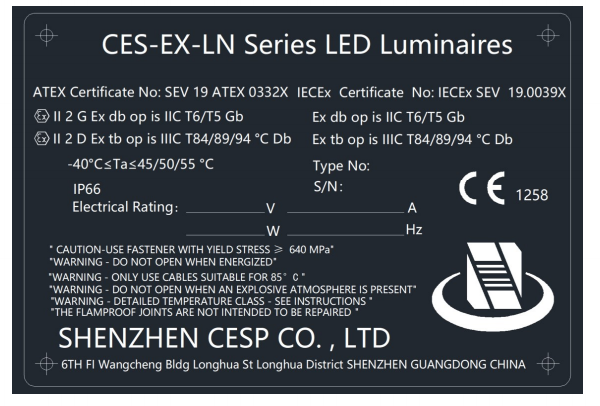
- CES-EX-LN-02-W-A-B-C-D
CES - SHENZHEN CESP ;
EX - Hazardous Locations;
LN - Linear;
02 - Division 2 ;
W - Power;
A – Configuration, 01:Line;
B – CCT, 01:3000K; 02: 4000K; 03: 6500K ; 04: 5000K; 05: 5700K…
C- Mounting, 01:Ceiling mount ; 02: U- bracket,;
D-other, Commercial purpose
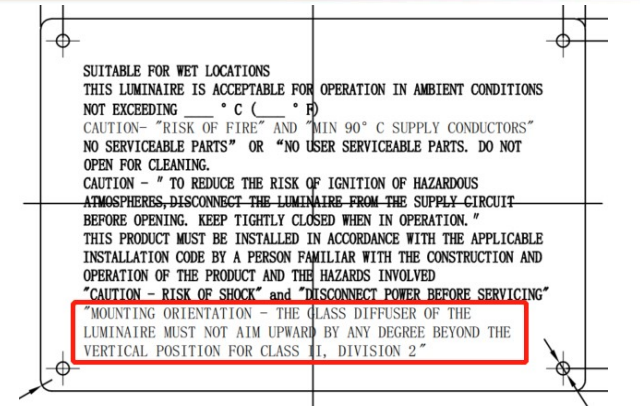
Note 1: Use the maximum value of the ambient temperature Ta 40/45/50°C (optional according to customer requirements) and write Fahrenheit at the same time;
Note 2: The red box is only marked in the case of double cavities, and the single cavity does not need to be marked;
- CES-EX-LN-02P-WX-A-B-C-D
CES - SHENZHEN CESP ;
EX - Hazardous Locations;
LN - Linear ;
02 - Division 2 ;
P - Design features, Polycarbonate;
W - Power;
X - Size, B: 0.6m, D: 1.2m;
A – Configuration, 01:Line;
B – CCT, 01:3000K; 02: 4000K; 03: 6500K ; 04: 5000K; 05: 5700K…
C- Mounting, 01: Drop mount; 02: Ceiling mount ; 03: Wire colour; 04:Pole Mounting;
D-other, Commercial purpose
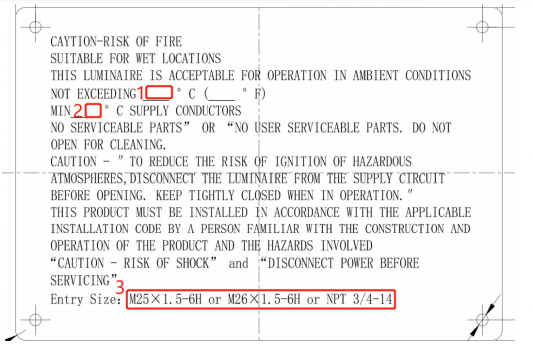
Note 1: The maximum value of the ambient temperature Ta is 45/50/55°C (optional according to customer requirements);
Note 2: The unified default is 90°C;
Note 3: Choose according to customer requirements, default NPT3/4-14;
- CES-EX-LN-02N-WX-A-B-C-D
CES - SHENZHEN CESP ;
EX - Hazardous Locations ;
LN - Linear ;
02 - Division 2 ;
N - Design features:Narrow;
W - Power;
X - Size, A: 1.2m, B: 0.6m;
A – Configuration, 01:Line;
B – CCT, 01:3000K; 02: 4000K; 03: 6500K ; 04: 5000K; 05: 5700K…
C- Mounting, 01:Ceiling mount ; 02:U- bracket;
D-other, Commercial purpose
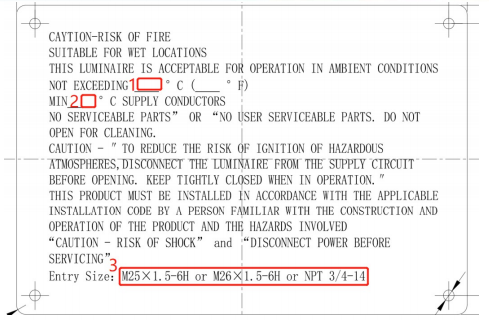
Note 1: The maximum value of the ambient temperature Ta is 45/50/55°C (optional according to customer requirements);
Note 2: The unified default is 90°C;
Note 3: Choose according to customer requirements, default NPT3/4-14;
- other aspects of analysis
In terms of parts procurement and supply chain, while implementing localization, it actively promotes the globalization of the domestic parts industry. The parts of explosion-proof lamps are completely purchased by manufacturers in global model factories, and the parts are guaranteed to be of high quality. During the design and production, the power supply cavity and the light source cavity were adjusted according to the explosion-proof certification requirements of different regions, and the heat dissipation system specially designed by industrial designers was used to enhance the safety performance of the explosion-proof linear lamp.
And with the continuous research and development of products, LN series explosion-proof lamps have also derived derivative products. If the customer needs the emergency function of the strip light, and wants to not affect the original installation method, you can choose CES-EX-LN-02P, built-in emergency power supply, this explosion-proof linear light neither installs nor affects the appearance, and The emergency time is around 90min,If the customer has no specific requirements for the installation method, you can also choose CES-EX-LN-02N series lamps or CES-EX-LN series explosion-proof lamps, add an independent emergency power cavity to place emergency drives and batteries, and the minimum can be used for 90 minutes, with emergency power 12W; Or customers who want better wiring and cost-saving, they can also choose CES-EX-LN-02P, which can output the wires at the same time, which perfectly solves the customer's customized needs.
Published in
CESP Ex Wiki
Tagged under
Friday, 02 July 2021 08:21
Hot Strip Mill lighting solution
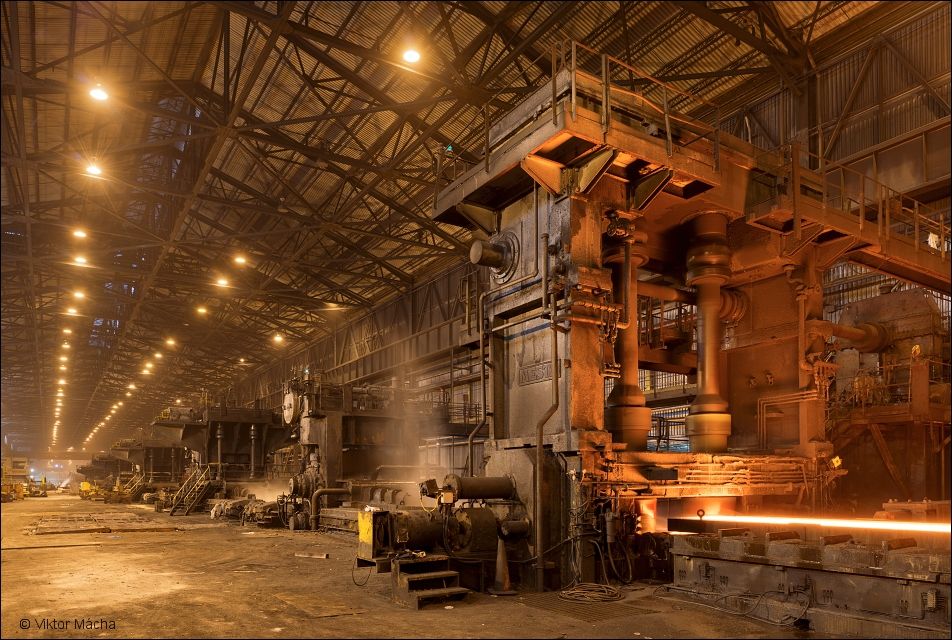
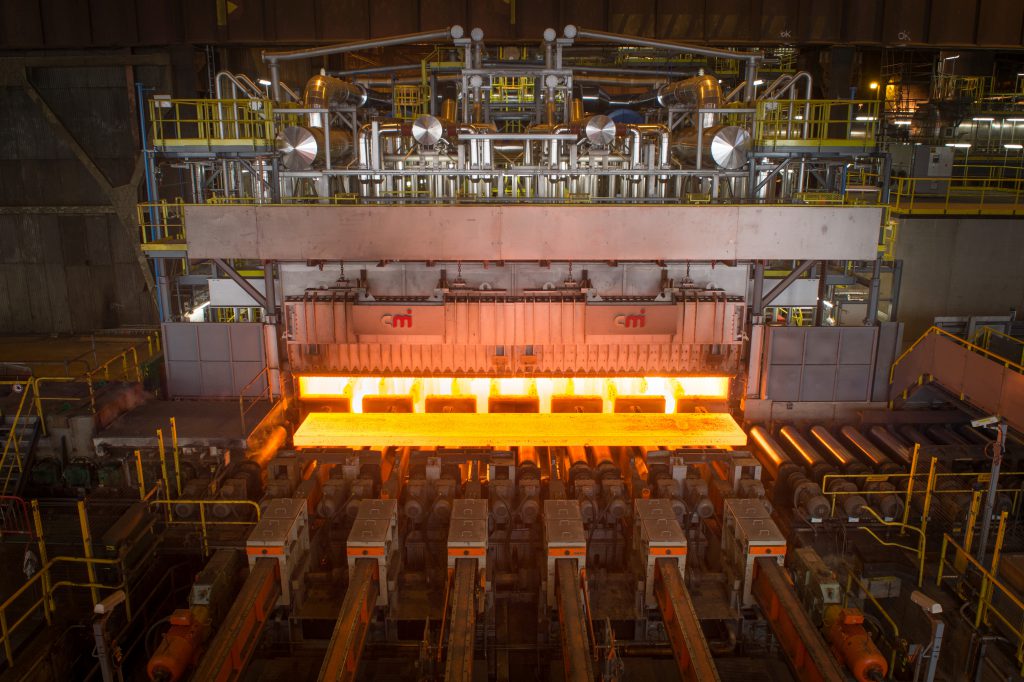
The main task of the steelmaking plant is to desulfurize, dephosphorize, decarburize, and deoxidize the molten iron, and then cast the molten steel into steel billets. The hot rolling plant is an important step in the production of steel bars. It will make the steel embryos through hot rolling or cold rolling again after heating and rolling for several times, and then cut the edge and correct them to finally become steel plates.
Many hot-rolling workshops use relatively old-fashioned metal halide lamps. The lamps have low light efficiency, high power consumption, high failure rate, and large after-sales maintenance. They cannot guarantee the lighting needs of on-site production. In order to solve the lighting problems, our company is based on the actual situation. Summarize and solve the lighting problem of the hot rolling plant from the fundamental problem.
The recommended lighting level in each area of the steel rolling workshop
|
no. |
workshop and workplace |
average illumination(lux) |
|
|
1 |
soaking furnace |
furnace top platform and meter room platform |
75 |
|
slag conveying corridor, platforms on all floors under the furnace, steel ingot car and motorcycle tunnel |
30 |
||
|
coke powder corridor, coke powder room |
30 |
||
|
rectifier room |
100 |
||
|
2 |
heating furnace |
beside heating furnaces such as thin plate, cold drawn, steel pipe workshops, etc., transport hot steel areas |
75 |
|
push the steel machine |
50 |
||
|
platforms on each floor of the basement of the heating furnace |
30 |
||
|
3 |
rolling mill area |
general ground |
75 |
|
rolling mill, hot saw, shearing machine place |
150 |
||
|
depress the screw indicator and hole pattern |
300 |
||
|
on the roller table of the rolling line, on the hot steel conveyor |
150 |
||
|
cooling bed |
75 |
||
|
4 |
main electrical room |
electrical room |
200 |
|
air-duct |
30 |
||
|
main control room |
500 |
||
|
5 |
operating room |
300 |
|
|
6 |
steel billet and finished product warehouse |
on the ground |
75 |
|
billet cutting location |
100 |
||
|
grinding machine, billet dressing station and slab pre-selection location |
300 |
||
|
printing, inspection, precision classification and acceptance |
500 |
||
|
finished product packaging location |
50 |
||
|
7 |
oil depot and general transmission basement |
50 |
|
|
8 |
correction machine |
50 |
|
|
9 |
spot welding location |
50 |
|
|
10 |
welding location |
100 |
|
|
11 |
heat treatment |
annealing |
50 |
|
pickling room |
100 |
||
- Slab library
|
Position Title |
Slab library |
|
|
The function and role of the post |
Numbering slabs, and stacking different slabs in different areas |
|
|
On-site characteristics |
Characteristics of building structure |
The plant is relatively spacious |
|
Features of the equipment |
Main equipment driving |
|
|
Characteristics of the environment |
Indoor environment, very high temperature, vibration |
|
|
Lamp requirements |
① The lamp is well sealed and has anti-vibration design. ② Lighting accessories (sealing ring etc. can withstand high temperature). ③ The electrical appliances have high temperature resistance and are easy to use inductive ballasts. ④ It is recommended to use split installation, place the electrical part on the side of the visitor channel, and the principle of hot steam dense area; |
|
|
Recommended lamps |
The CEX-EX-J explosion-proof LED flood light adopts a sealed structure with high waterproof and anti-corrosion performance. It meets UL1598A marine-level certification. The excellent heat dissipation structure design allows the efficiency and service life of the tube to withstand higher mechanical strength and temperature changes. The power cavity and the light source cavity are separated separately, and the explosion-proof performance is reliable. It is a cost-effective hazardous area floodlight with ATEX\IECEX\UL certification. |
|
- Heating furnace
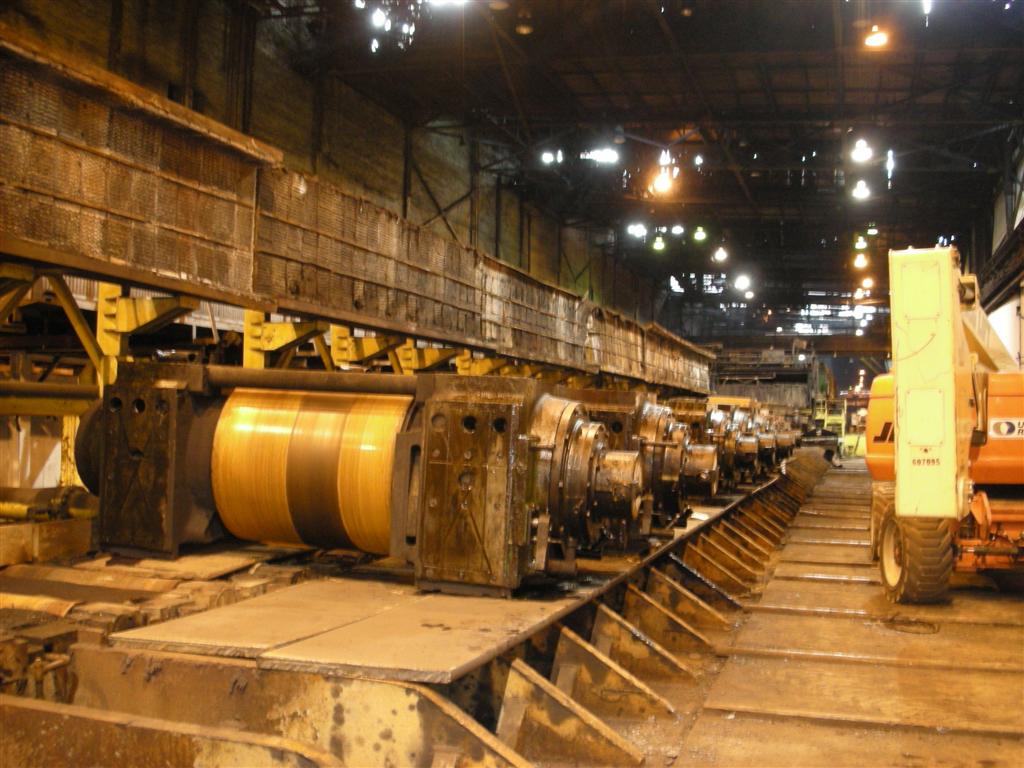
|
Position Title |
Heating furnace |
|
|
The function and role of the post |
Heat the slab to about 1200 degrees and send it to the rolling line |
|
|
On-site characteristics |
Characteristics of building structure |
The plant is relatively spacious |
|
Features of the equipment |
The main equipment is the vaporization cooling heating furnace system. It is mainly divided into: water supplement system, circulation system, sewage system, cooling water system, complex structure, vibration, and part of the equipment is in the basement. |
|
|
Characteristics of the environment |
Indoor environment, with a lot of steam, very high temperature, humidity, vibration, gas, flammable, explosive and toxic gas. |
|
|
Lamp requirements |
① The ceiling lamps are sealed to at least IP65, and have anti-vibration and anti-corrosion design. ② Lamp fittings (sealing ring, etc. can withstand high temperature). ③ The lighting equipment close to the furnace body such as corridor lighting, platform lighting, etc. needs to use explosion-proof lamps. ④ Electrical appliances have high temperature resistance and are easy to use inductive ballasts. |
|
|
Recommended lamps |
CES-EX-LN02 explosion-proof LED linear lamp has extremely sturdy circuit devices and completely sealed electrical components, and has IP66 and WF2 anti-corrosion grades. In addition to being able to withstand severe vibration and vibration, it can also prevent any corrosion that may cause electrical failure . Hazardous areas Linear lights also have multi-voltage capabilities. They can operate under 100-277 VAC, 50/60Hz, without additional special ballasts. |
|
- Rolling line
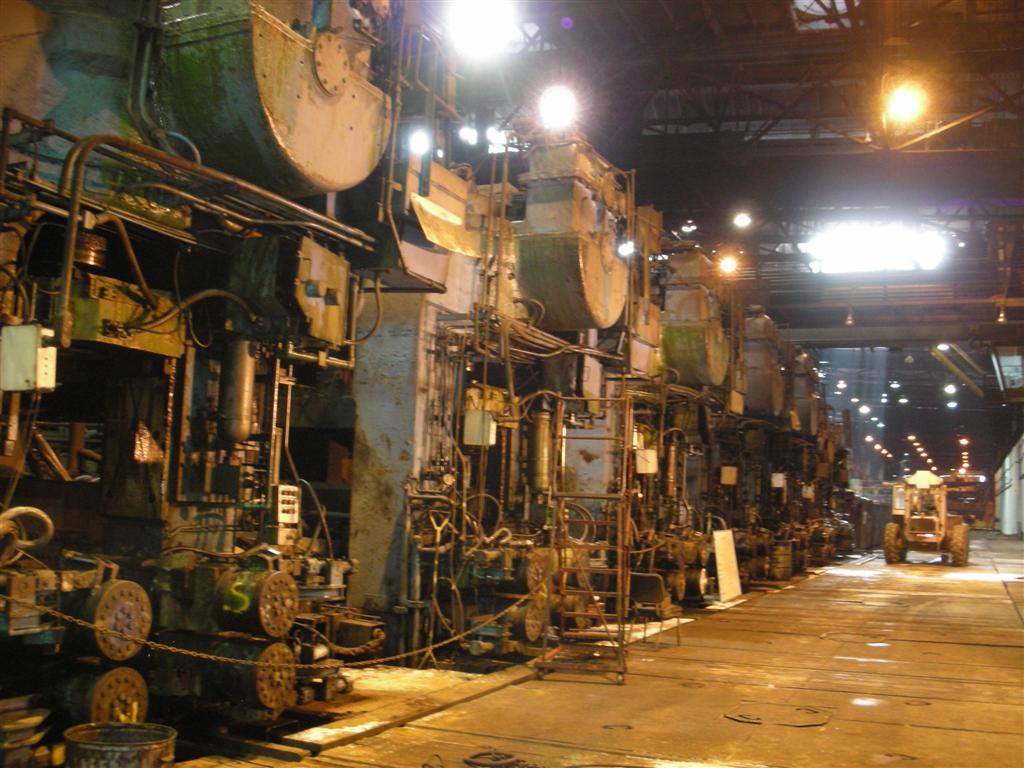
|
Position Title |
Rolling line |
|
|
The function and role of the post |
Rolling slabs into strips of different thicknesses |
|
|
On-site characteristics |
Characteristics of building structure |
The plant is relatively spacious |
|
Features of the equipment |
(Main equipment: dephosphorization box, vertical roll, roughing mill, hot coil box, flying shear, finishing dephosphorization machine, small vertical roll, finishing mill, laminar cooling roller table, underground coiler), there are many links, Continuous operation, vibration. |
|
|
Characteristics of the environment |
Indoor operations are corrosive and have certain vibrations. The equipment should be flushed with water. |
|
|
Lamp requirements |
① The ceiling lamps are sealed to at least IP65, and have anti-vibration and anti-corrosion design. ② Electrical appliances have high temperature resistance and are easy to use inductive ballasts. ③ It is recommended to adopt a split installation, and place the electrical part on the side of the visitor channel, where the principle is hot steam dense area. |
|
|
Recommended lamps |
The internal electrical components of the CEX-EX-LN explosion-proof LED linear lamp are completely sealed and can work underwater (3 meters, we have a long-term hydraulic test and heavy pressure test). The light source room is completely separated from the power source, effectively avoiding electrical sparks. The impact of components or optical components, the hazardous area linear lamp has IP66 waterproof rating, 10mm thick tempered glass + ADC12 and 6063 aluminum housing, shock and vibration resistance, can withstand 7J impact, suitable for salt water and corrosive environments. |
|
- Finishing
|
Position Title |
Finishing |
|
|
The function and role of the post |
1. Reshape the strip. 2. Adjust the length, width, and weight of the strip according to customer needs. |
|
|
On-site characteristics |
Characteristics of building structure |
The plant is relatively spacious |
|
Features of the equipment |
Equipment (including uncoiler, straightening machine, cutting machine, hydraulic shears), there is vibration, there are large motors and control parts, there are electric meters for motor operation, etc. There are many occasions where there are camera monitoring. |
|
|
Characteristics of the environment |
Indoors, it is corrosive, the temperature is high, and there is a certain amount of vibration. |
|
|
Lamp requirements |
① The ceiling lamps are sealed to at least IP65, and have anti-vibration and anti-corrosion design. ② Lamp fittings (sealing ring, etc. can withstand high temperature). ③ Electrical appliances have high temperature resistance and are easy to use inductive ballasts. ④ It is recommended to adopt a split installation, and place the electrical part on the side of the visitor channel, in an area with dense hot steam. |
|
|
Recommended lamps |
CES-EX-GB explosion-proof high bay light is a high-power explosion-proof lamp. The flameproof shell design can prevent the electric spark generated in the lamp from being transmitted to the outside. Its protection level is IP66/67, can withstand 7J shock and vibration, and its explosion-proof performance is better than HPS Explosion-proof lamps, metal halide lamps, halogen lamps, etc. are more reliable. The wiring cavity, power supply cavity, light source cavity and other cavities are independently divided into cavities. The explosion-proof performance is reliable and it is very corrosive and high-temperature environment. |
|
- Curl and pack
|
Position Title |
Coil library |
|
|
The function and role of the post |
Roll the flattened steel and pack it out of the warehouse. |
|
|
On-site characteristics |
Characteristics of building structure |
The steel coil warehouse has a large area. |
|
Features of the equipment |
The main equipment is a coiler and a crane for packing and storing carbon steel and stainless steel after sorting and sorting. |
|
|
Characteristics of the environment |
Indoors, the temperature is high and there is a certain amount of vibration. |
|
|
Lamp requirements |
① The ceiling lamps are sealed to at least IP65, and have anti-vibration and anti-corrosion design. ② Lamp fittings (sealing ring, etc. can withstand high temperature) ③ Electrical appliances have high temperature resistance and are easy to use inductive ballasts. ④ It is recommended to adopt a split installation, and place the electrical part on the side of the visitor channel, in an area with dense hot steam. |
|
|
Recommended lamps |
The unique installation module design of CES-EX-GB02 explosion-proof high bay light enables the light to achieve 90-degree aiming and efficient ballast. The device has EOL protection function, which can eliminate potential accidents. Each cavity, such as the wiring cavity, the power supply cavity and the light source cavity, is independently divided into cavities, and the explosion-proof performance is reliable. The IP66/67 protection level, durability, anti-vibration and impact resistance make the lamp more efficient and safer. |
|
- Roller repair room
|
Position Title |
Roller room |
|
|
The function and role of the post |
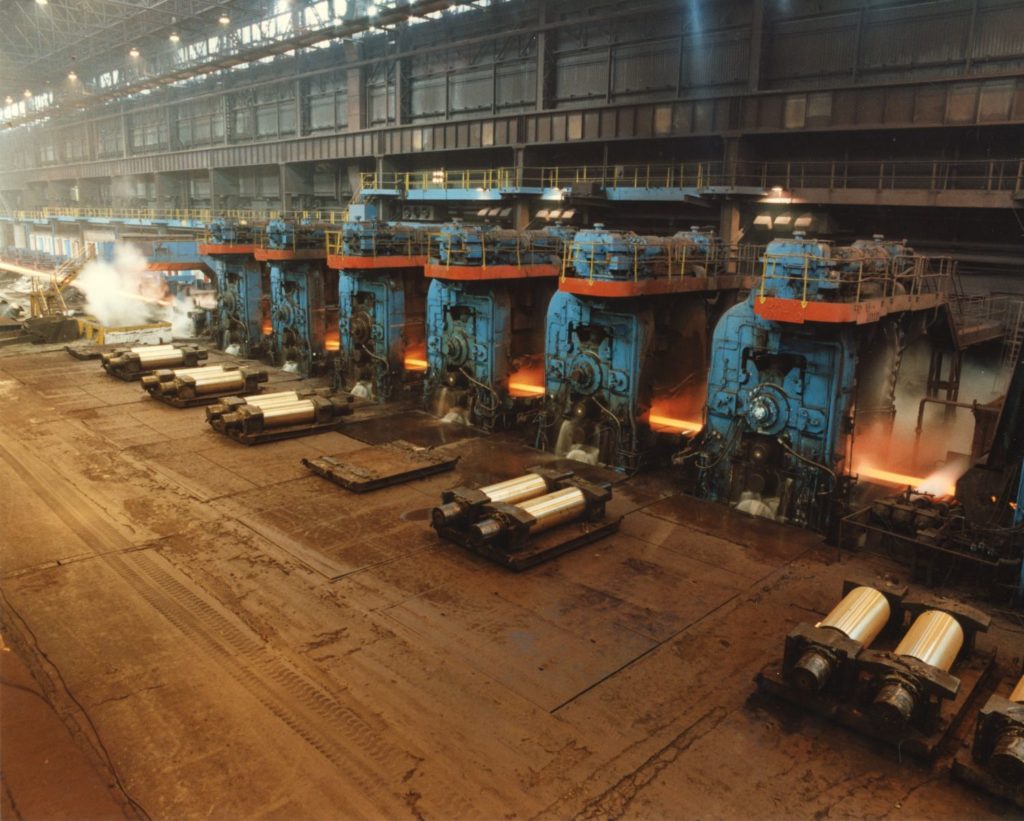
Check and trim the accuracy of rolls, store all kinds of rolls |
|
|
On-site characteristics |
Characteristics of building structure |
The workshop is spacious. |
|
Features of the equipment |
The main equipment is driving. |
|
|
Characteristics of the environment |
Indoors, there is a certain amount of vibration. |
|
|
Lamp requirements |
① The ceiling lamps are well sealed and have anti-vibration design. ② It is recommended to use split installation, and place the electrical part on the side of the visitor channel to reduce the weight of the lamp. |
|
|
Recommended lamps |
The CES-EX-SF explosion-proof LED canopy lamp has a sturdy shell, and the internal electrical components are completely sealed. It has the characteristics of impact resistance, vibration resistance and corrosion resistance. The PC mask diffuses to reduce glare, can withstand 6J pressure, and the maximum temperature does not exceed T4, which is much lower than the traditional The temperature of the lamp. Energy efficiency is 80% higher than that of metal halides. The service life is up to 50,000 hours, making it maintenance-free for almost many years. |
|
- Electrical room
|
Position Title |
Electrical room |
|
|
The function and role of the post |
The control center of electric equipment such as motors in the hot rolling area. |
|
|
On-site characteristics |
Characteristics of building structure |
Spacious workshop |
|
Features of the equipment |
The main equipment is electrical cabinets and control cabinets. |
|
|
Characteristics of the environment |
Indoor, conventional environment. |
|
|
Lamp requirements |
① No special requirements. ② Conventional fluorescent lamps or ceiling lamps can satisfy lighting requirements without glare. ③ The choice of lamp type depends on the structure and height of the workshop plant. |
|
|
Recommended lamps |
CES-EX-LN-02P explosion-proof linear light design replaces the traditional explosion-proof fluorescent lamp, explosion-proof tri-proof lamp, anti-glare-micro optics can reduce direct visual contact with the light source. The slim and streamlined design of linear lights in hazardous areas allows access to limited spaces at a low installation height, and is IP66 waterproof and dustproof, with a life span of more than 50,000 hours. |
|
Shenzhen CESP Co., Ltd. focuses on the field of special industrial lighting. It is a high-tech enterprise integrating design, R&D, production and sales. The complete management team covers the lighting fields of China's electric power, metallurgy, oil refining, railways, large industrial and mining enterprises, marine ships, etc. Provide professional lighting supporting solutions, and also provide advanced technical support and product supporting services for internationally renowned companies.
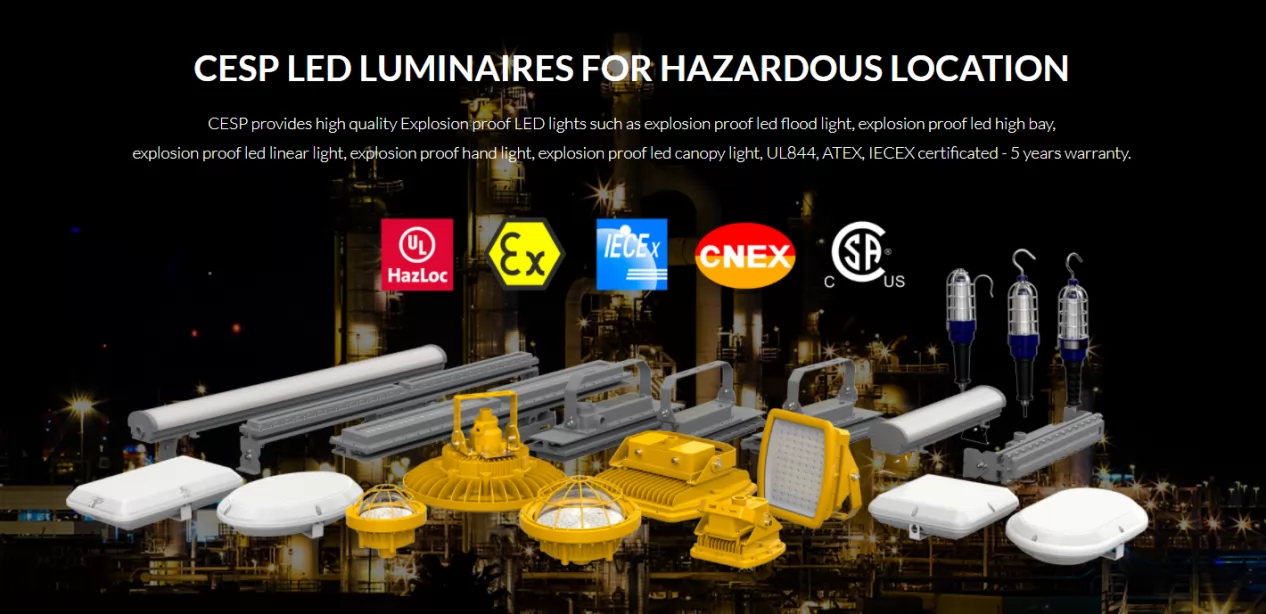
At the same time, CESP is also ATEX certified led manufacturer, UL led manufacturers and IECEX certified led supplier. The company’s products include explosion proof LED flood light, explosion proof led highbay light, explosion proof led canopy light, explosion proof led linear light, explosion proof portable hand light etc. If you have explosion-proof lighting needs, you can click on the page to contact us, or call our hotline +86-755-83509822.
Published in
Application
Tagged under
Friday, 02 July 2021 08:20
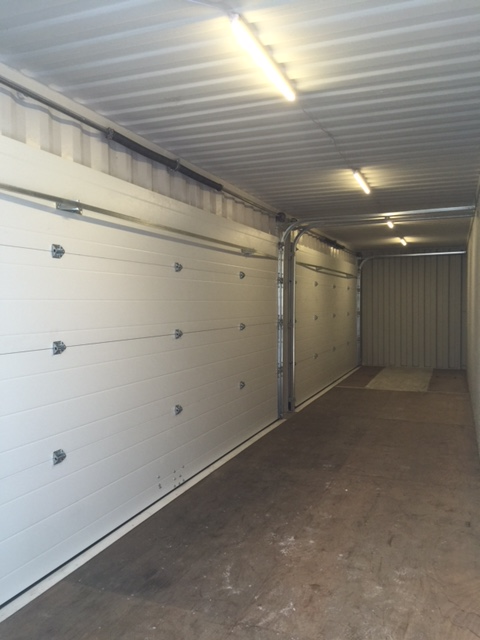
Container Lighting Solutions
Containers, also known as cargo loading, can not only be used to transport goods by sea or land, but are also often used as simple mobile houses; the existing lighting system of house containers usually installs lights on the top of the house container.First of all, we must understand that the container has several advantages:
- Introduce modern home furnishing elements, taking a single cabinet as a unit, which can be combined and superimposed in any combination. The performance of sealing, sound insulation, fire prevention, moisture resistance, heat insulation, etc. should be better.
- The overall structure, welded and fixed, is stronger and safer, more wind-resistant, and more earthquake-resistant. It will not fall apart or collapse in the event of typhoon, earthquake, ground subsidence and other disasters.
- The whole box can be hoisted, no concrete foundation is needed, 15 minutes installation, 1 hour check-in, and it can be used when it is connected to the power supply.
- Floors, walls, ceilings, water and electricity, doors and windows, exhaust fans and other one-time decoration, permanent use, energy saving, environmental protection and beautiful.
- The design is more user-friendly, living and working are more comfortable, and the number of rooms can be increased or decreased at any time, which is convenient and flexible.
- The relocation does not need to be dismantled. The items in the room can be moved with the box without loss. It can be hoisted and moved more than a thousand times, which is convenient and saves money.
- After the decoration of the container, the inner area is about 13 square meters, and each container is 12,000 yuan, which is nearly 900 yuan per square meter. Compared with the current housing prices in many places, it is very cheap.
In 2018, the US "Business Weekly" listed 20 important inventions that are most likely to change our way of life in the next 10 years, and the container house ranked 19th. The US "Business Weekly" said: "Using containers to rebuild houses, this invention can solve the housing problem of hundreds of millions of poor families. At present, a container house with a usable area of 30 square meters sells for less than 10,000 US dollars."
According to statistics, there are about 18 million steel containers floating on the sea or on roads to transport goods in the world. In addition, there are about 2 million containers in idle state. All containers will eventually be eliminated. However, they are very sturdy, because they must be able to carry a weight of 30 tons to sail at sea. If they can be reused effectively, it will not only save costs, but also save resources and protect the environment. For the port, container transportation is one of the main transfer methods of the port.
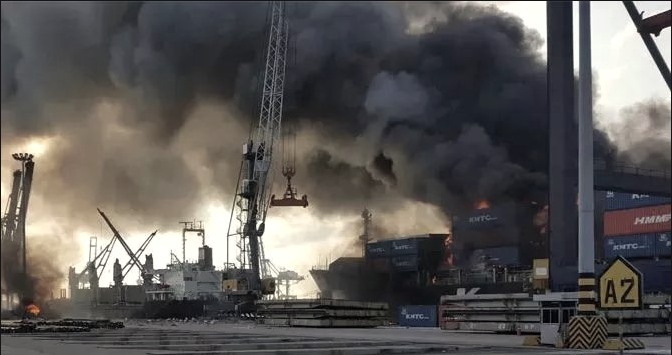
Except for dangerous goods containers, although the probability of fire in the port loading, unloading and storage of ordinary goods containers is low, there are still many factors that lead to the occurrence and spread of fires. These complex factors are intertwined, making it very difficult to save.
- Possible causes and cases of container fires
- Burning caused by carton
The cargo in some containers is packed by cardboard. These packaging cardboards are spontaneously combustible substances, and they are usually made of raw materials such as rice straw, wheat straw, and reeds. These raw materials are grass-like plant fibrous substances, which are composed of cellulose, hemicellulose, lignin and a small amount of pectin, resin and wax. Under the condition of high water content, biological, physical and chemical can occur. Change and release a lot of heat. The container has a certain degree of airtightness. In summer, the temperature inside the box can reach 50. When the temperature difference is large, the wall of the box will “sweat” and water will accumulate at the bottom of the box. In addition, the heat generated by the products packaged in the cardboard will also cause the cardboard to burn. At 19:00 on September 7, 2004, the Liberian container ship "China Ocean Hong Kong", which was parked at the terminal of Shanghai Port Container Waigaoqiao Branch, was heated by unqualified rechargeable nickel-metal hydride batteries loaded in a container in the cabin. , The heat cannot be dissipated in time, and the heat gathering effect will ignite the cardboard packaging materials, causing a direct loss of RMB 3.1 million.
- Smoldering and spontaneous combustion of cotton and hemp
Packed cotton, whether in transit or in stacks, will not spread quickly after being caught in a fire, sometimes due to insufficient oxygen supply. The combustion is often carried out slowly in a local or small area. In this kind of combustion, no flames or smoke can be seen, and it is in a smoldering state. It can last for several days or even dozens of days without being easily noticed. But when the smoldering cotton suddenly encounters air convection, not only can the smoldering cotton become completely burnt quickly, but it can also cause the mixture of carbon monoxide and air to deflagrate. Cotton can also ignite spontaneously. The reason is that cotton will inevitably be infected with a large number of microorganisms during the process of picking and processing. Under humid conditions, microorganisms are easy to grow and reproduce, and when the water content in the cotton fiber is appropriate, the microorganisms can grow and reproduce rapidly, secrete cellulase and acid, generate heat, and make cotton moldy and change color. Over time, if the accumulated heat does not dissipate, and the temperature gradually rises, spontaneous combustion will occur. Hemp fiber plants such as jute, hemp, sisal and cotton have similar characteristics, and they also have smoldering and spontaneous combustion.
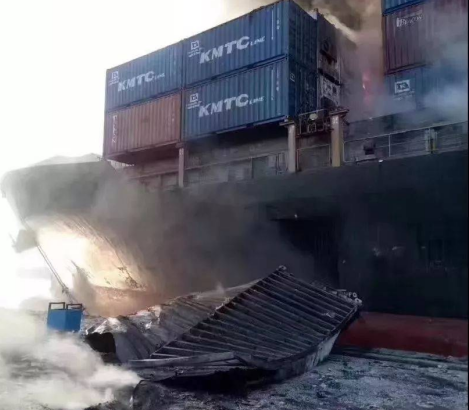
- Oxidation and spontaneous combustion of chemical products caused by heat and moisture
Containers are generally stacked in open yards, so they have to withstand the sun and rain. Especially in summer, the highest temperature in some areas can reach more than 40 ℃, while the surface temperature is higher. Under such high temperature, the temperature inside the container can reach 50°C. At this time, some chemical products in the container, such as high-nitrogen fertilizers, fish meal, etc. will be easily thermally decomposed and oxidize and spontaneously combust. In addition, the "sweat" of the tank wall will also cause the chemical products to be damp and cause oxidation and spontaneous combustion. At 13:00 on July 16, 2004, the sodium disulfite in the container of the "Nantai 27" vessel berthed at the No. 5 anchorage of Guiyu West, Shantou Port, Guangdong Province, China was spontaneously ignited due to moisture, causing 3 people to be injured and a direct economic loss of RMB 2.068 million yuan.
- Personnel operating errors cause fire
Improper operations such as container maintenance and cargo disinfection can also cause fires. The container is inevitably damaged during transportation. If the maintenance personnel accidentally splashes on combustibles during electric welding and gas welding operations, it will cause a fire; when performing operations such as disinfection of flammable and explosive goods in the container, violation of relevant regulations Improper handling can also cause fires. At about 18:40 on July 10, 2002, workers at the Fuyong dock in Shenzhen, China, improperly detonated the container while disinfecting the incoming container that had just entered the terminal, causing another 13 adjacent to the fire and explosion container to contain scrap hardware and waste. Plastic containers were also ignited by the fire. Three dockers were burned and seriously injured.
- Lightning strikes and fires
The open-air cargo yard where the containers are stacked is a large open area, which is extremely vulnerable to lightning strikes. If there is no lightning protection device installed in the open yard, the container may be struck by lightning and catch fire.
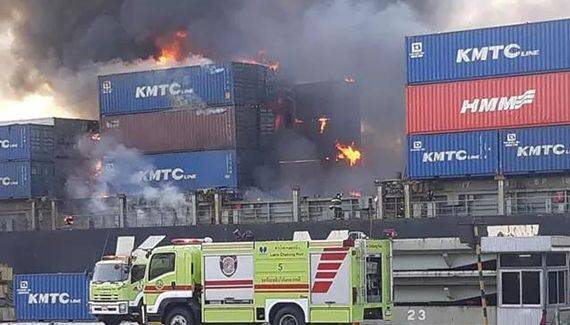
- External fire and man-made arson
In order to facilitate mechanized loading and unloading, container transportation packs the loose goods to be transported in boxes in advance. If the goods are not inspected before packing, it is possible that the kind of fire touched during transportation will be entrained into the box, which may cause a fire. In addition, it has been found from the investigation of fire causes over the years that man-made arson accounts for a certain proportion, so man-made arson may also be one of the causes of container fires.
- Container fire spreading method
Container fires will spread mainly through heat conduction, but also through heat radiation, explosion splashing, and melting of combustibles.
- Heat Conduction
There are three ways to transfer heat energy in a fire, and heat conduction is one of them. Most of the existing container manufacturing materials all over the world are aluminum alloy and steel plate. This kind of metal material has a large thermal conductivity. Therefore, once a certain container catches fire, the heat energy will first be transferred to the adjacent container through heat conduction. As the heat accumulates, the combustible materials in the adjacent container will be ignited. If the lower container catches fire first, the load-bearing capacity of the upper container will be reduced due to thermal deformation, and the upper container will easily collapse, and the combustibles loaded on it will be ignited after it is scattered.
- Thermal radiation
When the fire reaches a certain scale, the spread of the fire through heat radiation will become more significant. With the expansion of the fire, the heat radiation of the fire source to the nearby combustibles is also increasing. When the radiant heat increases to a certain extent, the combustible materials at a certain distance from the fire source will be ignited by receiving enough radiant heat flow.
There are many types of cargo loaded in containers, and the heat transferred through radiation is blocked by the container shell, so it is difficult to determine the minimum heat flow value for combustible materials ignited by radiation.
- Explosion splash
Explosion refers to a process in which physical energy and chemical energy change rapidly in a certain space or state, and in this process the resident energy in the system is rapidly converted into kinetic energy, mechanical energy, light and thermal radiation. Therefore, explosion can also be said to be an extremely rapid process of physical or chemical energy release. After a fire occurs in a container, the flammable gas generated cannot be fully burned or released, and higher temperature and pressure will accumulate in the container, which may cause an explosion because it is not easy to dissipate heat and release pressure. Some explosive fragments, such as flaming steel bars, burning goods, etc., will further expand the fire if they fall on other combustible materials.
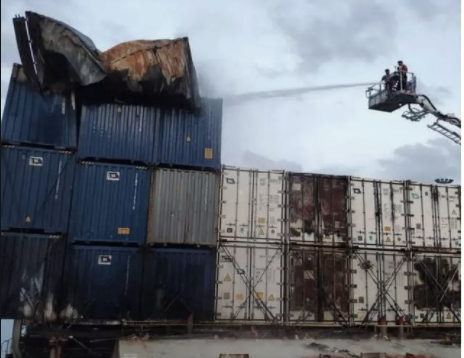
- Melting of combustibles
Rosin, glass, beeswax, pitch and other substances do not have a certain melting point and freezing point, and are called amorphous. Since there is no melting point or freezing point, it changes from hard to soft during the endothermic process, and then gradually becomes liquid. During the entire melting process, the temperature continues to rise. In a container fire, non-crystalline goods melt and become liquid after absorbing a lot of heat. The container is usually not completely sealed. If these high-temperature liquids flow through the gaps to other combustibles, the fire will spread.
- Factors for the expansion of container fires
- The fire-fighting facilities of the container yard are not sound
The unsoundness of fire-fighting facilities in container yards has both objective and subjective reasons. The objective reasons are mainly due to geology and the construction method of the wharf, which make it difficult to lay fire hydrants and pipelines on the wharf, or the setting of fire water sources is unreasonable, and the design of fire water consumption is not compatible with actual needs. Due to the limited geographical location of ports, most port container yards are reclaimed from the sea, and settlements will occur to varying degrees over time. The fire-fighting pipelines laid under the large slabs of the container terminal-gravel concrete) caused serious leakage of pipelines due to uneven settlement, and it was very difficult to repair under the large slabs of the yard. In this case, most ports have closed the pipeline Valve approach to prevent the waste of water resources and protect the yard.
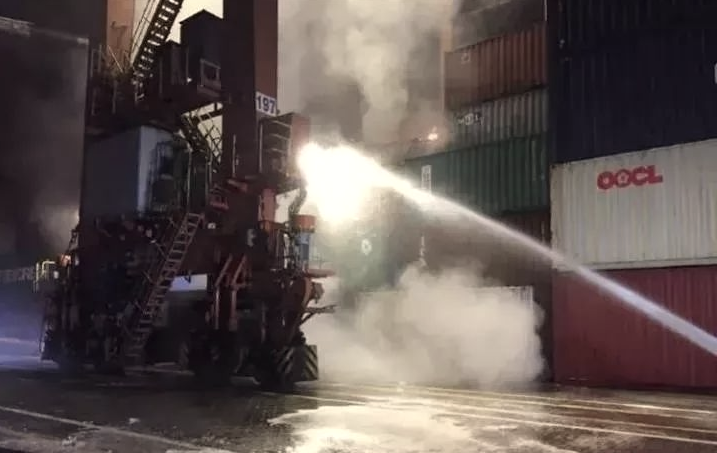
The lack of special fire protection regulations for container yards is also one of the factors restricting the perfection of fire protection facilities in container yards. At present, China's container yard is mainly designed in accordance with the national standard "Code for Fire Protection Design of Jianzhu" (GB 50016-2006), but the standard does not clearly stipulate the design parameters of the fire water supply of the container yard, resulting in the actual design and use process Different designers use different water supply rates. This is likely to cause the designed fire fighting water consumption to be incompatible with actual needs. If the designed water supply is too large, it will cause a waste of investment, and if the designed water supply is less than the actual need, once the yard catches fire, it will greatly affect the fire fighting effect.
On the other hand, the unsound fire-fighting facilities are also caused by the subjective reasons that the relevant departments do not pay attention to. Because the probability of fire in the container of ordinary goods other than dangerous goods is low, this makes some relevant personnel paralyzed and neglects the daily inspection and maintenance of fire-fighting equipment.
- The alarm is not timely and the effectiveness of fire fighting is poor
Containers are often stacked in multiple layers, generally 4-5 layers high. If a certain container inside the yard fires first, it will be difficult to find out from outside the yard in time, and the fire may have developed to a certain scale when it is discovered. Moreover, since the fired container may be inside the yard, it is difficult for the sprayed fire-fighting water to effectively act on the fired container box. In addition, container fires are often caused by the cargo inside the container. Even if a certain container outside the yard catches fire first, due to the tightness of the container and the densely packed cargo, the firefighters will not be able to effectively extinguish the fire. The surface of the container can be cooled by jet water jets. The thermal conductivity of metal will quickly spread the fire to the surrounding area, increasing the difficulty of fire fighting.
- The container has good sealing performance, which may cause an explosion in the event of a fire
The container has good airtightness. Therefore, once a fire occurs inside the container, the flammable gas generated cannot be fully burned or released, and higher temperature and pressure will accumulate in the container, which may cause an explosion. Because the explosion is a violent physical and chemical change, accompanied by the generation of light, heat, and pressure, and causes dissociation and hypoxia in the explosion area, it has a great destructive effect. The fired objects splashed by the explosion will not only expand the fire area of the fire, but also directly affect the personal safety of firefighters. In order to avoid casualties, firefighters often have to temporarily evacuate or stay away from the burning container to carry out fire fighting, which will affect the fire fighting effect and delay the fire fighting opportunity.
- The seaside wind speed is relatively high
The container yard is open and built near the sea, so the wind in the yard is relatively high, and sometimes typhoons may occur. Such weather conditions will not only promote the spread of fires, but are also not conducive to fire fighting.
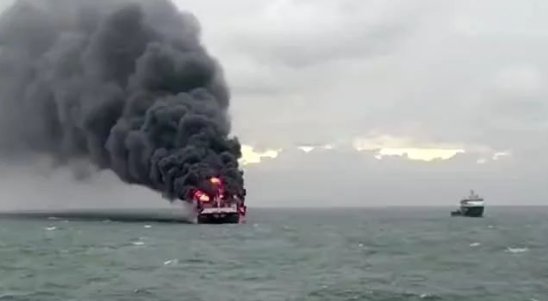
Through the above analysis of container fire hazard and previous fire cases, it can be known that it is difficult to extinguish a container after a fire occurs and the water demand is large. Therefore, the container yard must be equipped with stable and reliable fire-fighting facilities and relatively stable safety facilities, such as anti-corrosion and dust-proof transportation. Belts, explosion-proof lamps with high safety, cranes with strong bearing capacity, etc.
Shenzhen CESP Co., Ltd. focuses on the field of special industrial lighting. It is a high-tech enterprise integrating design, R&D, production and sales. The complete management team covers the lighting fields of China's electric power, metallurgy, oil refining, railways, large industrial and mining enterprises, marine ships, etc. Provide professional lighting solutions, At the same time, it also provides advanced technical support and product supporting services for well-known international companies. CESP's products have obtained the North American UL certification, the European Union ATEX certification and the international IECEX certification, It is very suitable for general area lighting installed in wastewater treatment, oil and gas refineries, drilling rigs, petrochemical facilities, food and beverage facilities, tunnels, outdoor or indoor installations, as well as places where flammable vapors, gases, combustible dust, fibers or flying exist Use in hazardous areas.
CES-EX-J series explosion-proof LED floodlights are safety-increased and flameproof enclosure lights. The shell is made of high-strength aluminum alloy + tempered glass, which has stronger vibration and impact resistance. The designer took into account the heat dissipation performance of the explosion-proof lamp, and designed the back of the lamp to have a corrugated effect, so that the efficiency and service life of the lamp tube can withstand higher mechanical strength and temperature changes. This hazardous area LED floodlight complies with UL1598A marine-grade certification. The sealed structure prevents water vapor from entering the lamp body. It complies with IP68 and WF2 standards and is very suitable for humid salt water and corrosive environments. The floodlighting device has passed the precise light distribution design and good optical system, coupled with the excellent 3D heat dissipation structure design, so that this high-power hazardous area floodlight has the best lighting level and the lowest maintenance cost, and There are a variety of installation methods and a variety of luminosity for users to choose, It is very suitable for use in hazardous environments such as local lighting, low-rise lighting, stairwells, gantry and walkways, craft skids, cable tray areas, low-overhead marine void spaces, paint and solvent storage rooms, gas stations, offshore oil and gas platforms, and chemical industries.
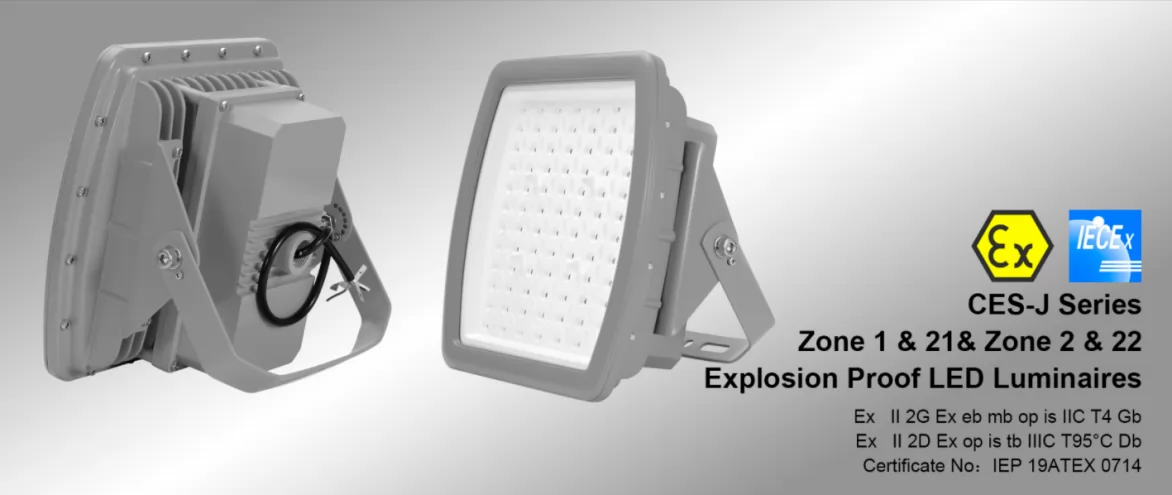
If you have related lighting needs, you can contact us directly, or call our hotline, we will provide quality services and lighting solutions that meet your needs.
Published in
Application
Tagged under
Friday, 25 June 2021 07:19
Port Terminal Lighting Solution
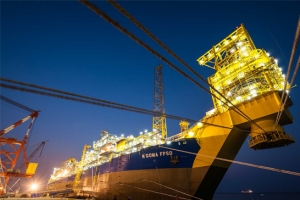
The port is an important transportation hub and a window to realize an export-oriented economy. China’s major ports have occupied an important position among the world’s ports. The container throughput has been ranked first in the world for many years, becoming the world’s largest port and container throughput. , The fastest growing country. As the economy continues to grow, energy conservation, emission reduction, and efficiency improvement have become urgent requirements for China and the world. For example, the power consumption of lighting in the Shanghai International Port Area is as high as 5.94 million KWh. Port companies have always been large energy consumers in the transportation industry. Energy saving has become one of the important means for port companies to enhance their international competitiveness in the new era. Therefore, the solution to port lighting Is the top priority.
- Lighting standards
The dock lighting standards for different purposes will be different. The following only gives the lighting standards for general areas.
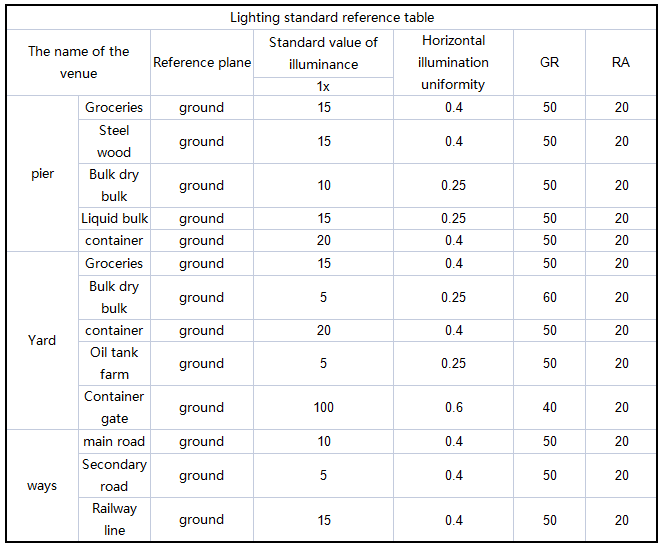
The wharf is located along the river and the ocean, and the air humidity is relatively high, and the erosion of salt fog and oceanic climate is serious. In addition, port refineries, also known as seaside oil refineries, are usually flammable and explosive, but because they are close to the sea, corrosion prevention needs to be considered. Especially near the southeast coastal areas of China, there are more typhoons and heavy rains, and the climatic conditions are harsh. At the same time, in the docks that transport bulk goods (coal or grain), there is the diffusion of fine particles, which will cause serious dust pollution. These are all factors that need to be considered when designing lighting. The lamps and lanterns used in the dock should meet the following requirements:
- High power: Because the height of the gantry crane is about tens of meters, it has the characteristics of wide adaptability and large working range. In order to meet the illumination requirements of the working surface, the power of general fluorescent lamps should be above 400W, and the power of LED lamps should be Above
- Long life: Due to the high height of the gantry crane, it is not easy to repair the lamp after it is damaged, so it is necessary to install a lamp with a long service life.
- Safe and reliable: There are many types of goods on the port terminal and the environment is complicated. It is necessary to configure safe and reliable lighting fixtures to ensure the lighting safety of the port terminal and prevent fire incidents caused by the short circuit of the lamps.
- High protection level: The port is in a humid environment all the year round, so the requirements for the waterproof and dustproof level of the lamps are relatively high. The lamps with high protection level can prevent water vapor from entering the lamp body and prolong the service life of the lamps. The lamp shell is made of high-quality aluminum alloy die-casting, and the outer surface is treated with high-voltage electrostatic spray, which improves the overall anti-corrosion level of the product. The whole lamp has an independent heat dissipation system and the drive is external. Waterproof, so that the protection level of the lamp reaches IP65, without fear of the humid environment of the port terminal. The anti-corrosion level of lamps needs to reach the WF2
- The light source and accessories are easy to replace.
- Lamp parts have good anti-corrosion performance.
- The lamp is installed stably and has good wind resistance.
- Unless otherwise specified by the owner unit, lamps must comply with the latest national standards (GB), International Electrotechnical Commission (IEC) standards and International System of Units (SI) standards.
- Selection of lamps
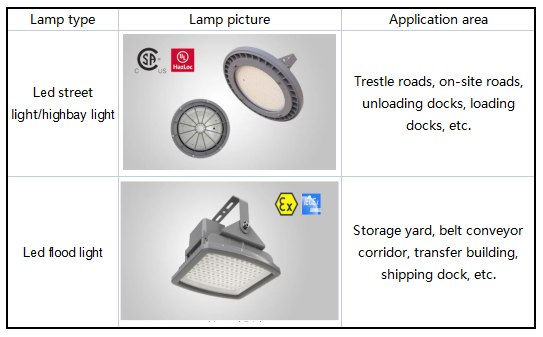
- Simulation lighting
In the simulation, the coal operation terminal is taken as an example, and the simulation is carried out in various scenarios. The simulation results are as follows:
- Ship unloading dock
The unloading dock should not only illuminate the belt conveyor belt above, but also illuminate the side road. The lamps are installed on the brackets outside the conveyor corridor.
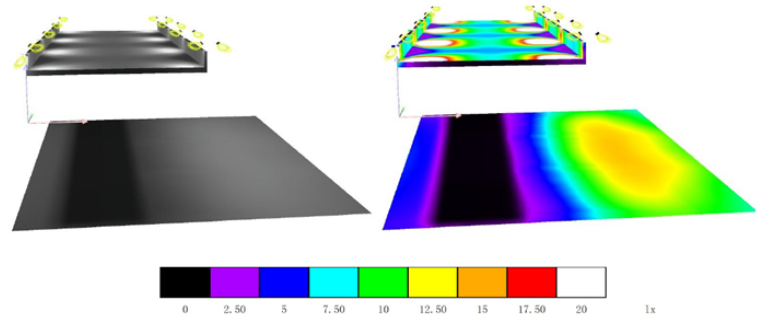
3D renderings and pseudo-color images
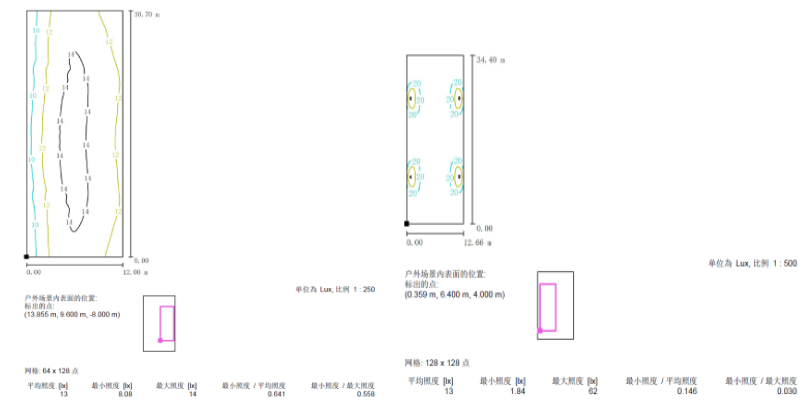
Calculation results
- Trestle
The trestle bridge is mainly for road lighting, so street lights can be used.
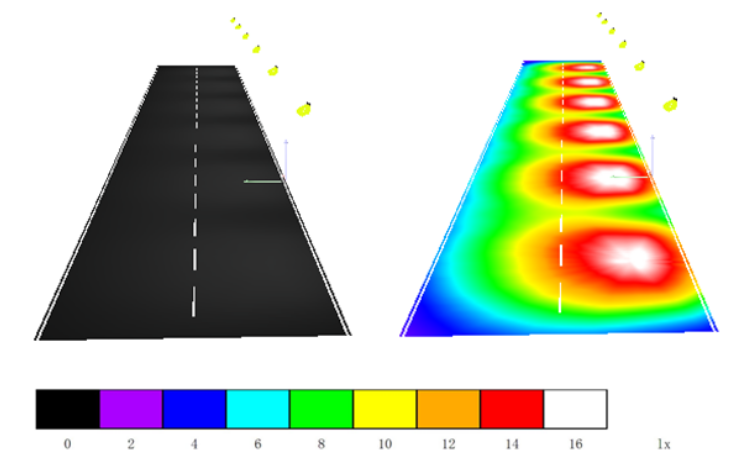
3D renderings and pseudo-color images
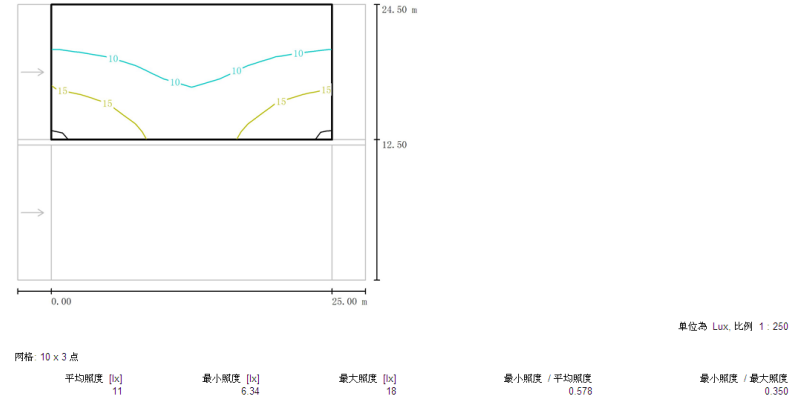
Calculation results
- Transfer building
Because of the power limitation of the belt conveyor, the belt length is limited, or the direction of the belt conveyor needs to be changed, the transfer building needs to be transferred. Because the transfer building is operated by humans, the illuminance requirements are high, and it needs to reach more than 100lx.
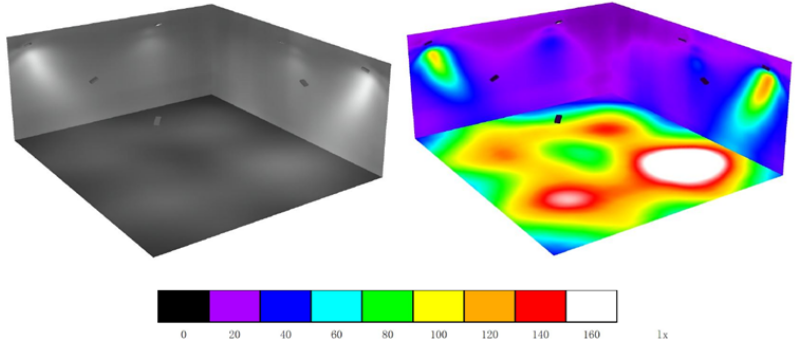
3D renderings and pseudo-color images
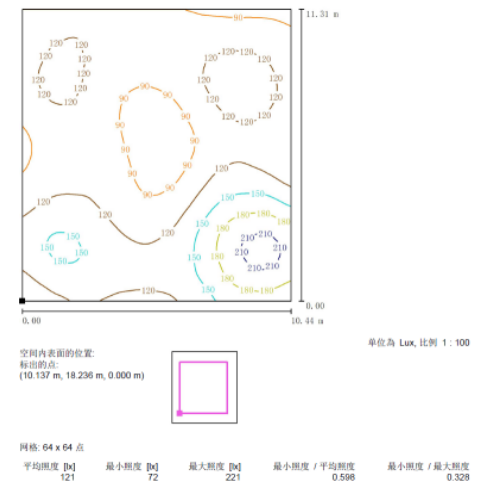
Calculation results
- Yard
The storage yard is generally a storage area for items, and the common lighting method is high-pole lighting.
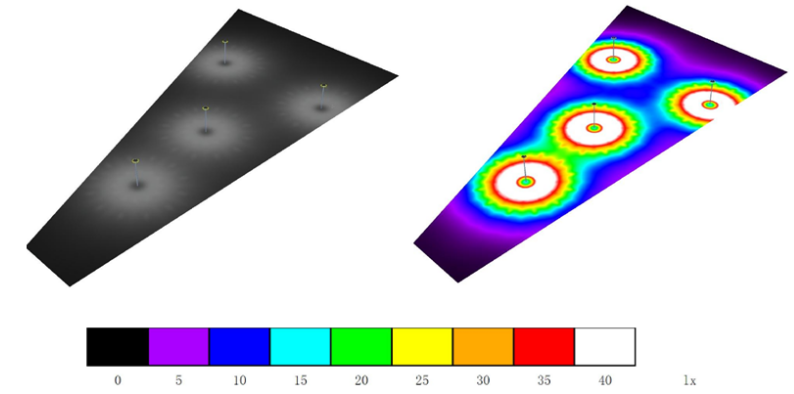
3D renderings and pseudo-color images
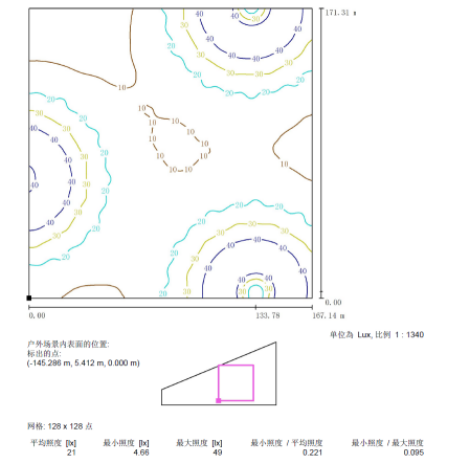
Calculation results
- Loading dock
Ship loading docks generally illuminate the ship’s deck and navigation channels in inland river basins. Street lights or floodlights can be used.
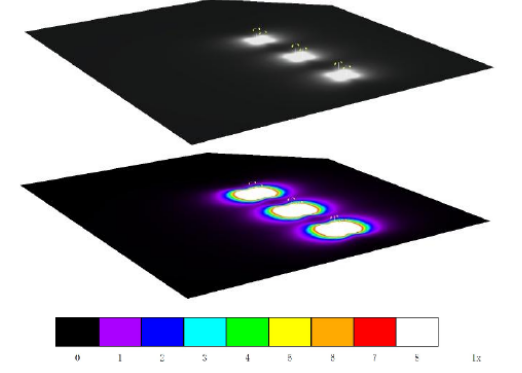
3D renderings and pseudo-color images
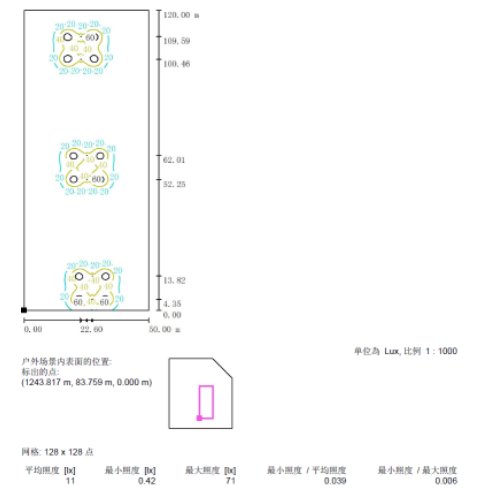
Calculation results
- Pictures of the scene
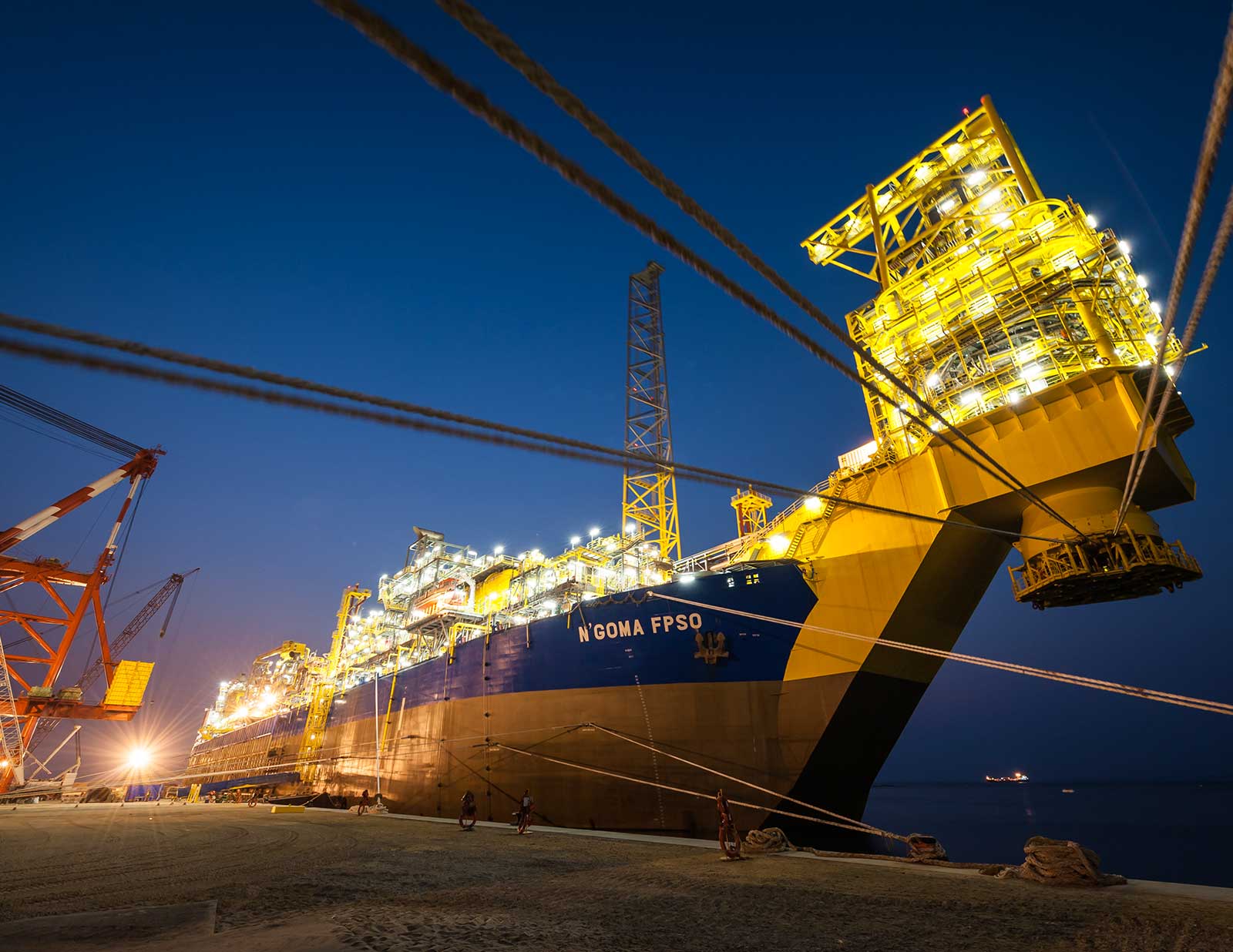
Loading dock
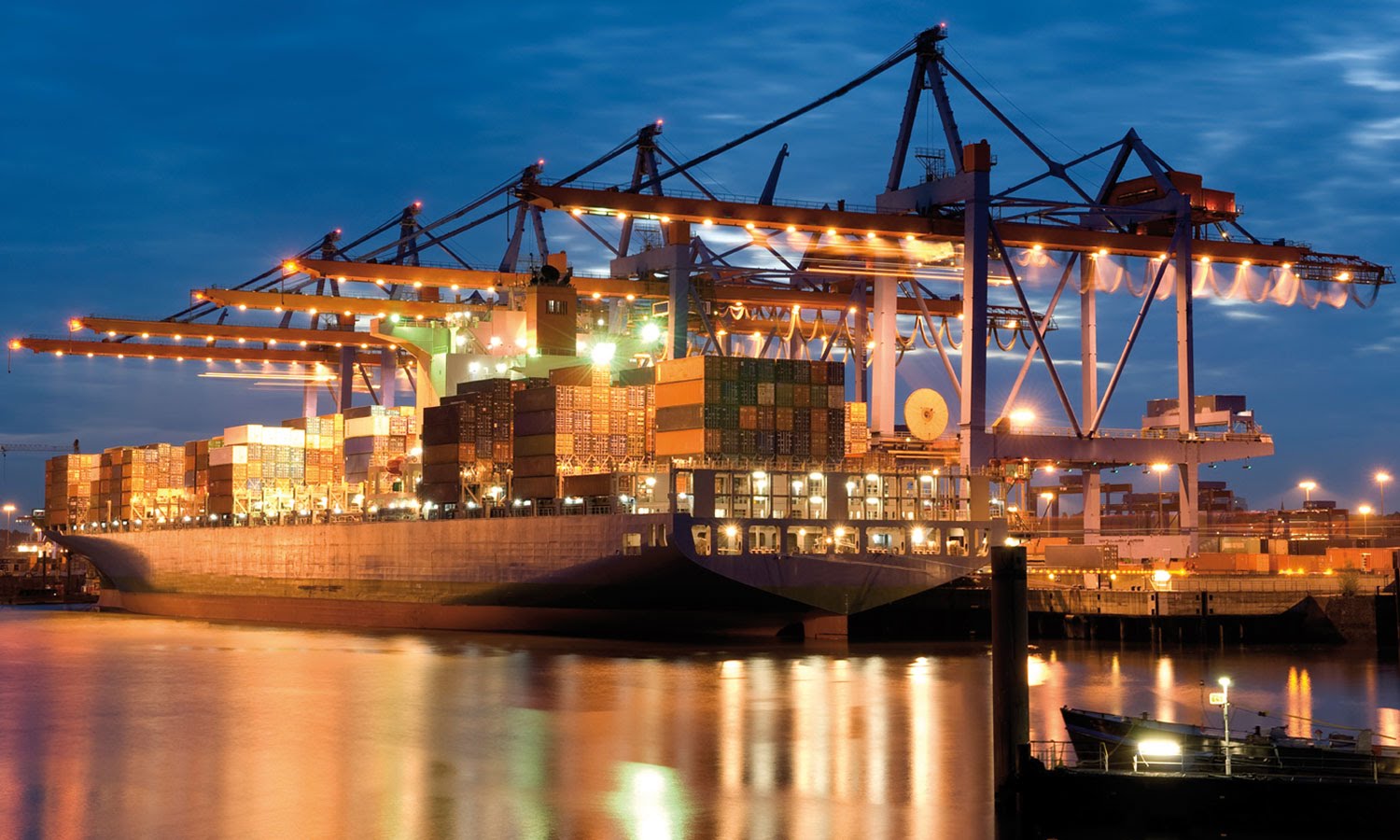
Unloading dock
Shenzhen CESP Co., Ltd. focuses on the field of special industrial lighting. It is a high-tech enterprise integrating design, R&D, production and sales. The complete management team covers the lighting fields of China's electric power, metallurgy, oil refining, railways, large industrial and mining enterprises, marine ships, etc. Provide professional lighting supporting solutions, and also provide advanced technical support and product supporting services for internationally renowned companies. CESP’s products have obtained North American UL certification, EU ATEX certification and international IECEX certification, which are very suitable for general area lighting installed in wastewater treatment, oil and gas refineries, drilling rigs, petrochemical facilities, food and beverage facilities, tunnels, outdoor or indoor installations. And use in places where flammable vapors, gases, combustible dust, fibers, or hazardous areas exist in flight.
The CES-EX-GB02 series explosion-proof high bay lamp body has a protection level of IP66 and an anti-corrosion level up to WF2. It is equipped with a corrosion-resistant high-strength aluminum alloy shell, which has good durability, vibration resistance, impact resistance and marine corrosion resistance.It is very suitable for salt water and corrosive environments. Although this explosion-proof lamp is a high-power LED high bay lamp, the power supply adopts wide voltage processing, can work under 100-277 VAC, 50/60Hz, and realizes constant current output. It has short-circuit and over-voltage protection functions, which greatly extend the lamp Service life. The explosion-proof LED high bay light shell is specially designed for heat dissipation, thereby improving the efficiency and service life of the LED lamp. The tempered glass cover is anti-glare design, with high illumination uniformity, no ghosting, effectively avoiding glare, spot and aperture, and does not damage the light efficiency . It is suitable for various low ceilings, platforms, high ceilings, high sheds and other places as solid lighting.
The CES-EX-J series of explosion-proof floodlights adopt a sealed structure with high waterproof and anti-corrosion performance. They comply with UL1598A marine certification and are very suitable for salt water and corrosive environments. Precise light distribution design and good optical system, coupled with excellent 3D heat dissipation structure design, make this high-power hazardous area floodlight, compared with traditional explosion-proof lighting fixtures, have the best lighting level and the lowest maintenance cost . As an increased-safety and shell-protected explosion-proof lamp, it can be used under T4 ambient temperature, and the shell is made of die-cast aluminum. The designer took into account the heat dissipation performance of the explosion-proof lamp, and designed the back of the lamp with a corrugated effect. It can work under the environment of -40℃-55℃, with longer life span, which can reach more than 50,000 hours. Obtained UL844/ATEX/IECEX certification, and guaranteed a five-year warranty, this makes this hazardous area floodlight very suitable for local lighting, low-level lighting, stairwells, gantry and walkways, craft skids, cable tray areas, low-overhead ocean void spaces, paint and solvent storage rooms, gas stations, offshore oil and gas platforms , Chemical industry and other hazardous environments.
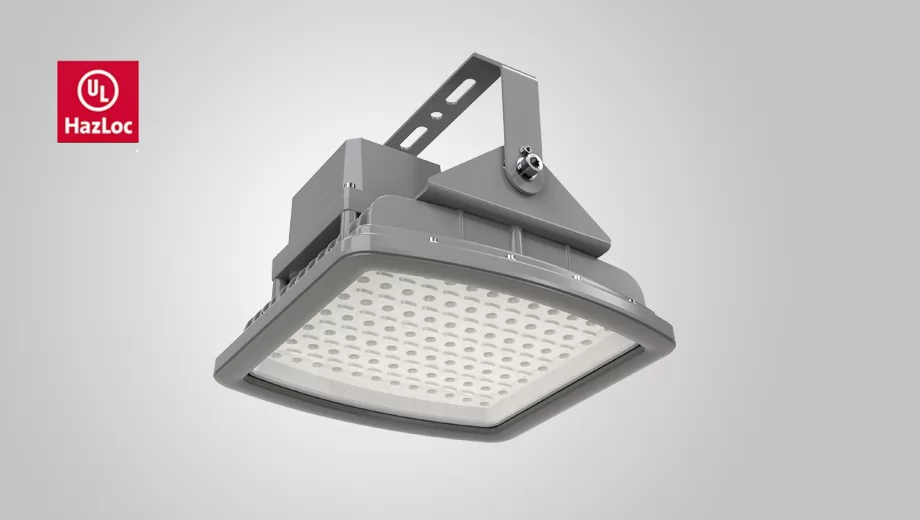
CESP also has lighting solutions for offshore drilling and oilfield joint stations. If you have related lighting needs, you can contact us directly or call our hotline. We will provide quality services and lighting solutions that meet your needs.
Published in
Application
Tagged under